the meat
Enemy
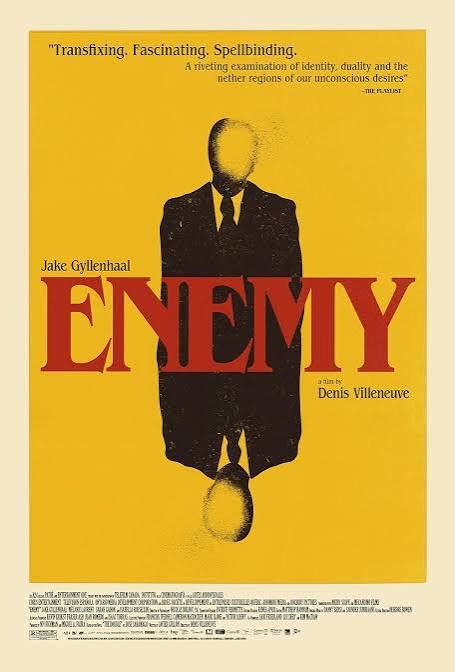
really weird, really interesting, really mind-bending. jake gyllenhaal turns in a dichotomous performance that sees him bending into both the extremes of his good guy-bad boy spectrum. unlike incendies and prisoners, director denis villeneuve really doesn’t do too much here. it’s a solid movie, by all means, however the tricks and intricacies and slow descent into unfathomable horror present in his other projects is not here. instead, much is left unsaid. perhaps too much. villeneuve challenges the audience to come up with their own conclusions more akin to his contemporary in christopher nolan– in movies like memento, the prestige, or inception– than his other films. he’s a master of the turn, of the reveal of the center of the maze that paints the narrative in a more complicated, often more sinister light. here, that turn never comes. the closest we get is gyllenhaal seeing his…new…wife turn into the giant spider, coinciding with his decision to use the newfound key. this mirrors his descent into his alter-ego, his enemy, thus closing the loop, ending the movie, and forcing the audience to draw their final conclusions on what just unfolded. it’s clever, it’s thought provoking, yet it doesn’t feel as fleshed-out, as cohesive, as villeneuve’s other projects. it actually wasn’t until i did a little research on the movie that i was able to gain more appreciation for it [as is, i suppose, often the case]. villeneuve’s film, enemy, is based on portugese poet josé saramago’s experimental novel, the double. the novel uses long, meandering passages devoid of punctuation or quation marks in order to illustrate the blurred line between protagonist and antagonist. this informed my viewing of the movie retroactively, helping to answer questions i had throughout that distraacted me from my immersion and enjoyment; “are they really different guys? what’s with the actresses who look similar, but not quite identical? how does that cold open tie in? why spiders?” the novel makes it clear that spiders are irrelvant– that it’s any monster, any thing you hate, that you want to control. and when we succumb to that desire to control everything around us we start to slip into that ugliness, into that monster that can’t help but see everything around them as monsters themselves. and it’s then that we fall into the abyss of that we feared deepest all along, but that is so closest to us, so present, so intimate and confusing and immediate: that we are our own enemy.
Zodiac
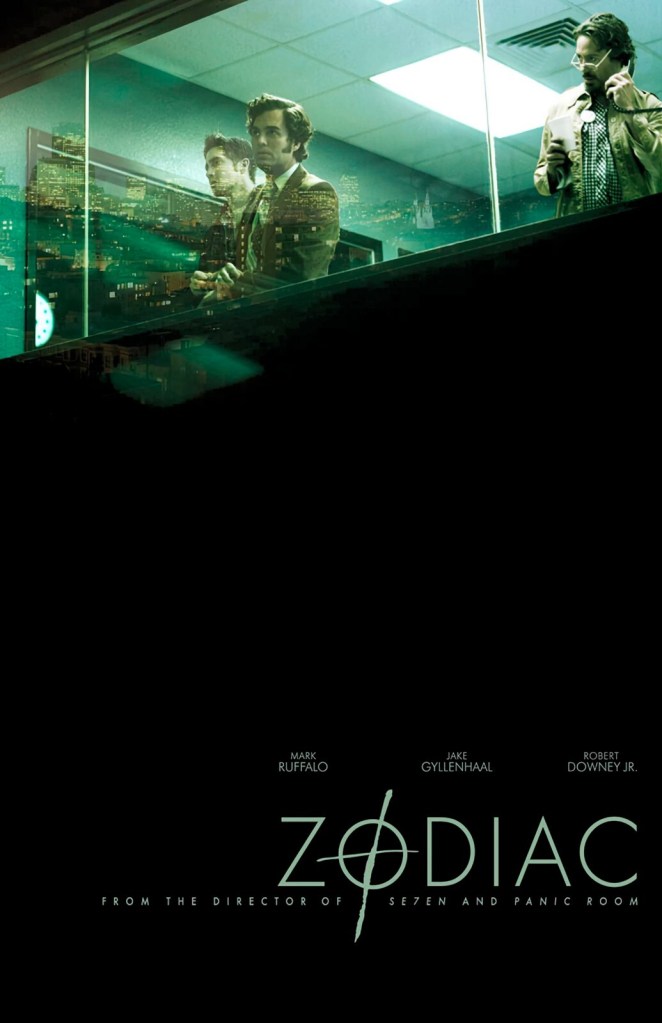
this is definitely up there with some of the best crime thrillers ever made, though it’s topped by another, more macabre entry into the genre [interestingly, also from fincher…]. what strikes me more than anything though, is how formidable of a great-actors-frantically-search-through-documents type movie this is. truly, gyllenhaal, robert downey jr., and mark ruffalo make looking at old newspapers and word puzzles absolutely riveting. i think of robert redford and dustin hoffman in all the president’s men as their only rivals in this niche genre, though i seem to remember spotlight being pretty great. though it’s been years since i’ve seen it. maybe i’ll watch that soon, since i’m in the mood.
Prisoners
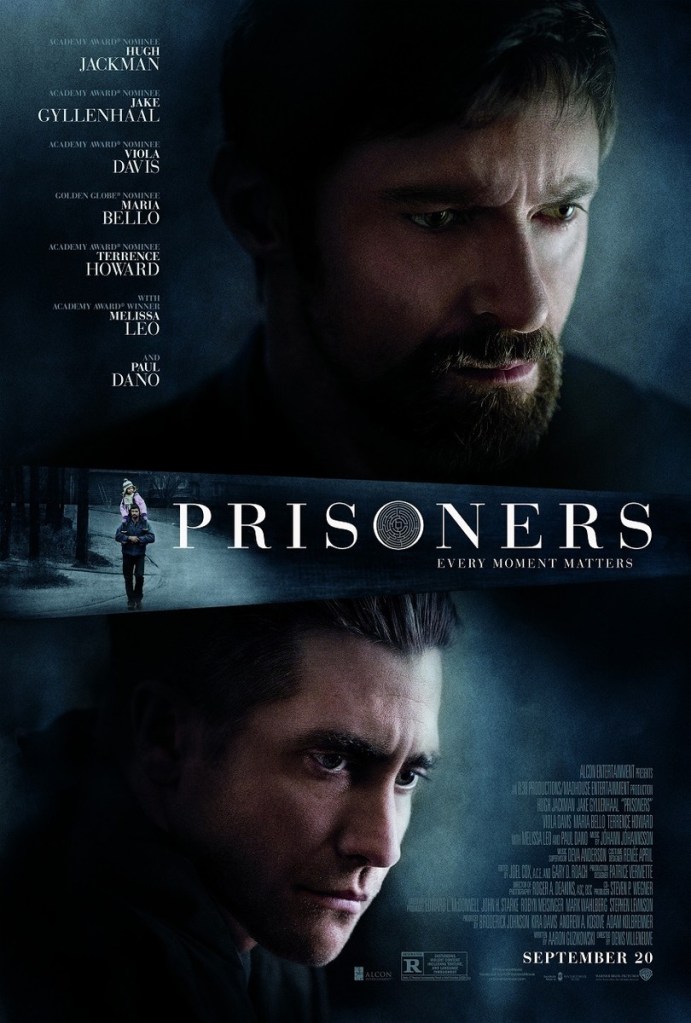
incredible. searing and dark and unflinching. a hallmark of director denis villeneuve. interestingly, of all the horror in this movie, it was the snake scene that freaked me out the most. i mean, the stakes could not be higher; the motivation to tough it out and brave the snakes could not be more palpable– yet could i do it? knowing that my efforts might save the kids? honestly, i don’t know.
The Odyssey
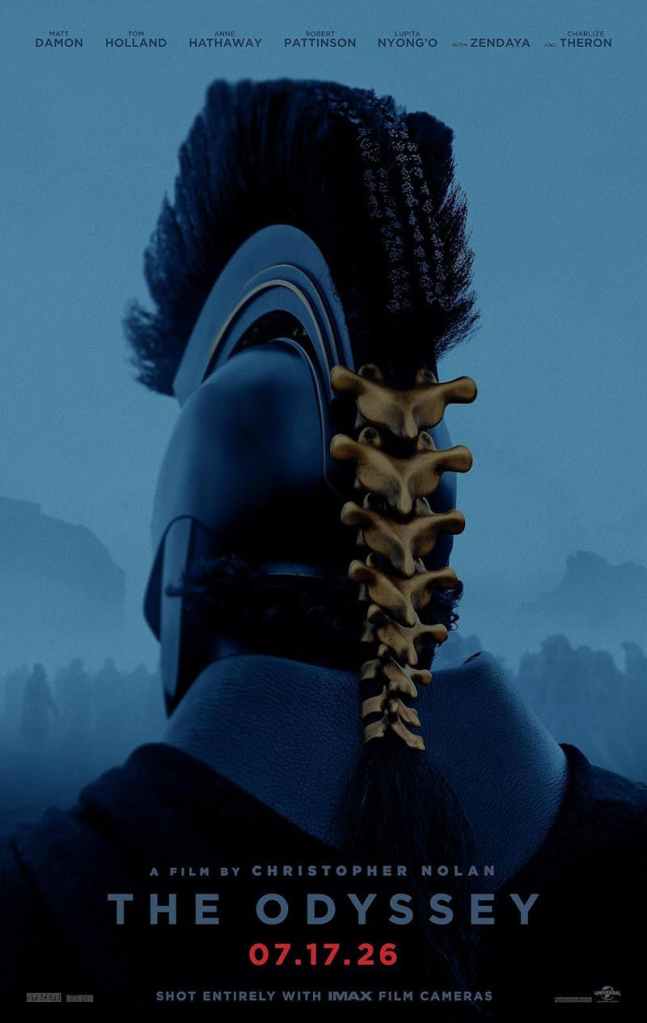
well, this was my first movie theater experience in over two years. i’m afraid of the theater as i’m afraid of all public spaces. i’m nervous and self-conscious and bubbling over with discomfort and shame. i don’t know exactly what drove me to the theater this time, but I’m glad I made it. this was a stunning, beautiful movie. i’m not afraid to say that i teared up multiple times throughout. i just felt this overwhelming sense of gratitude; gratitude that this existed, and that i could be here to witness it; that people were still making things with heart and soul and integrity and ambition and homage and style; that a real love for storytelling and creativity and technique and humans hadn’t yet been squashed and digitized and corporatized and capitalized. i’m standing outside the movie theater in san diego all alone, writing this out, and feeling emotional as i do so. there’s so many moments in this film that spoke to me. the jarring cut back to telemachus after menelaus tells the story of the trojan horse and the fall of troy: seeing telemachus’s face in the sudden quiet after the abrasive clangor of the epic battle scene; his tears and his grief and his confusion. the quivering of penelope‘s lips as the stranger, hiding his face, confronts her through the screen in the palace, and tells of odysseus’s shame at what he saw, and what he heard, and what he did. but, perhaps most of all, it was odysseus’s escape from calypso. the raft in the angry sea. the surrender. all alone. lost. so far from home. that sad defeated will to give up control. that intense, sorrowful, dignified bravery to not give up. it hit me. it makes me wonder what not giving up would be like. like the sea upon which odysseus and his crew were adrift, this is a film made of currents. currents of time, emotion, different shifting places, and an ever-thinning sense of humanity. director christopher nolan embraces these currents– he rides them– rather than imposing his will on them and attempting to force precise direction. because of that, i think the odyssey might be his most meandering project, but i don’t think that’s necessarily a bad thing. the direction of the ebb and flows and roundabout swirls of each narrative eddy is keeping within the spirit of homer’s poem; it’s supposed to descend into dark shadowy valleys and climb brutal, brilliant sunlit peaks. it’s supposed to embrace all that we try to cut out of our lives. i think it’s supposed to hurt. EDIT: i just walked put of the theater for the second time in three weeks. this time i saw it in 70mm [whereas before i saw it in imax]. another incredible experience. like the first time, i found myself holding my breath, waiting for odysseus’s first mythological encounter. and, like the first time, i found myself blown away. despite the magic, every visual felt so real, so visceral. and the first time you see the cyclops— its disfigured visage emerging from the darkness— you feel it too. you feel its ugly, lopsided eye contorted in your direction. truthfully, i couldn’t help but think of the music video for tool’s sober [disgustingly, beautifully made by the band’s guitarist, adam jones]. and thankfully, too, did i also feel the same emotional punch. most notably were the full body chills i got when meneleus recounted the invasion of troy; or when odysseus finally gave himself up to the sea; or, of course, when he’s repenting to a quivering penelope, all while hiding his face in shame. overall, i guess i felt relieved. relieved that indeed christopher nolan’s the odyssey is that good. that art does exist. that we still do feel. that i’m mot a fool, or a liar, or a piece of shit that can do nothing right but hide. that i can still feel, and still feel good.
The Damned United
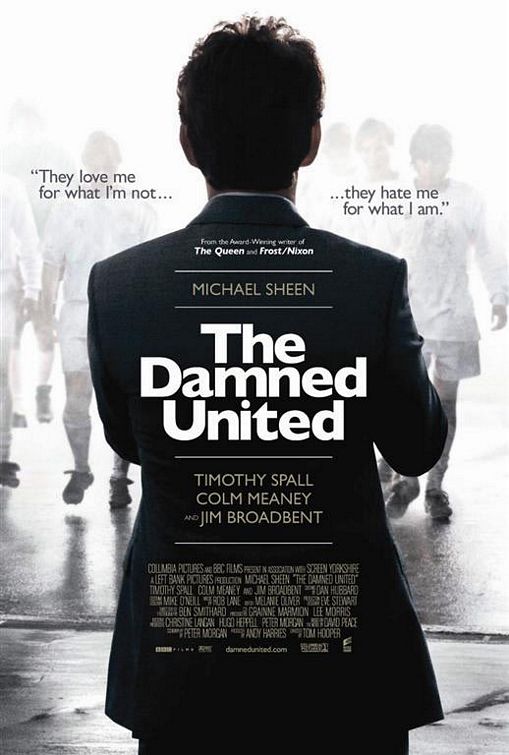
really liked this one! the bbc has such a knack for squeezing every ounce of juice out of a movie, no matter the budget or story [or the lacks thereof respectively]. super entertaining and full of wit. i found myself really engaged, especially considering the subject matter was one i have absolutely no knowledge of, thanks to michael sheen’s charismatic performance as brian clough. i guess i shouldn’t be surprised considering director tom hooper’s filmography, but regardless i was pleasantly so. it’s funny, just today i heard tom holland and dominic sandbrook [of the rest is history podcast] describe 1974 as “the worst year for britain in its entire political history…;” this movie wasn’t political at all; but yet the milieu it painted was strange enough that i think can start to understand a bit why. i mean, those football uniforms alone!
Louis Theroux: Savile
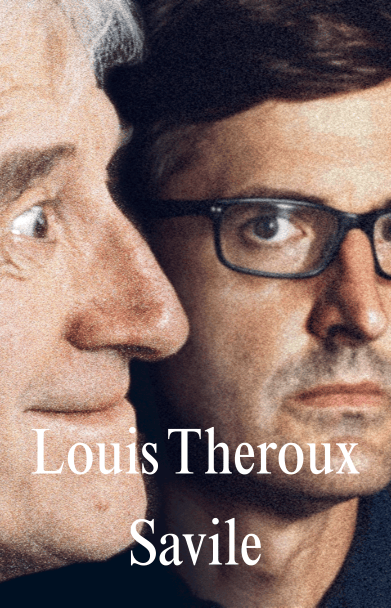
“do you feel like you were groomed?” such a show-stopping question from someone who’s supposed to be louis’s interviewee. the look on his face is gobsmacking, and even he starts to backslide into this denial we’ve seen from multiple women throughout the documentary. abuse can happen to anyone, but i think its processed and acknowledged by far less. amazing, enraging, heartbreaking documentary. thank you for this.
Marty, Life is Short
“we used to call it ‘maintaining the merry theme of life’.” and thus is this documentary so brimming with joy and heart and wisdom and care that it’s hard not to feel envious of the emotions emanating from the star studded ensemble onscreen. it’s hard for me to define what i just watched. there’s no real [read: commercial] reason for this to exist; martin short didn’t just die, nor did he achieve some career milestone; and it’s certianly not trying to capitalize on some wave of genre popularity, a la true crime. it just simply, is. and i find that really lovely. it’s a love letter from legendary hollywood screenwriter lawrence kasdan [raiders of the lost ark, anyone?] to lifelong friend martin short, coralling a ludicrous amount of a+ listers in front of a camera at short’s absolutely stunning canadian lakeside cottage [aptly called snug harbor]. there’s an atmosphere throughout of almost unbridled joy, where this group of truly lovable performers and bubbly human beings are enamored with each other and with their professions and with, well, life. it borders on the overly saccharine at times, but is continually reeled in, ensuring to invite the audience back in. kasdan, through marty short, is saying, “here, this is for you, too.” this is also why the build up to the death of marty’s wife, nancy dolman, seems inevitable, but all the more cruel. you can literally see him smiling through immense pain. and this is on the heels of his eldest brother, mother, and father dying within an eight year span in his youth. and– what’s more– this is all preempting the recent death of lifelong friend catherine o’hara, as well as the suicide of his daughter, katherine [named after o’hara]. upon reflection, perhaps it’s these two recent deaths that spurred the making of this film. the death of short’s daughter happened only three months prior to the documentary’s release. and perhaps that’s why the film is such an embrace of joy. for, despite the deep, cloying grief that must [surely, surely!] surround short and his family, kasdan paints a portrait using everything that makes martin short wonderful: “he moves at the speed of joy.”
The Chronology of Water
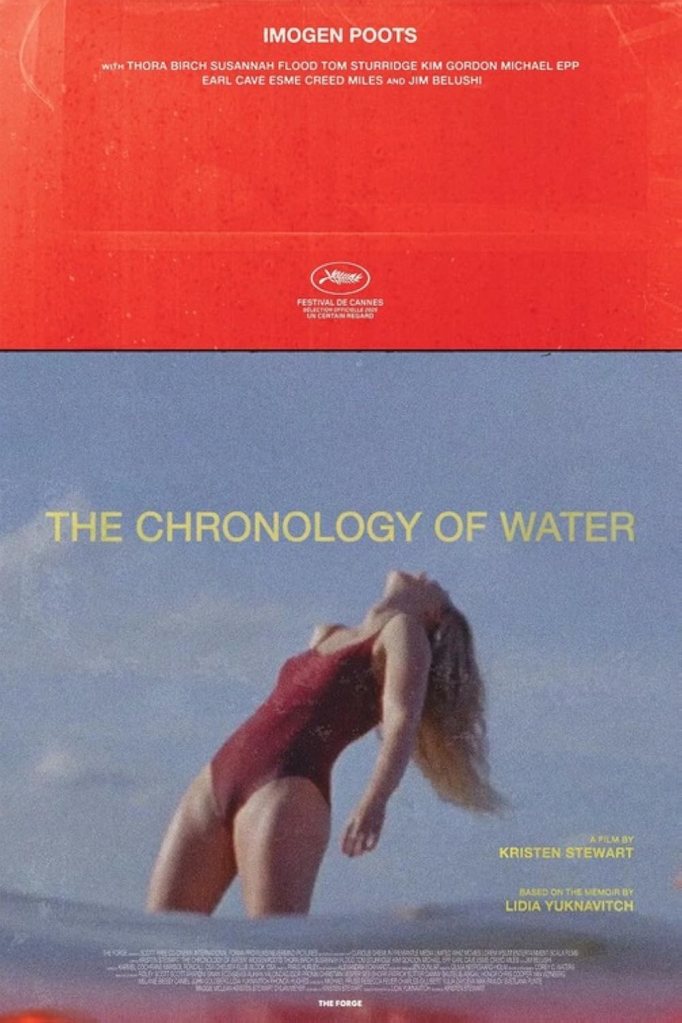
i’m wondering when the pain is going to stop. i don’t remember when it started. it seems like it’s always been there. memories of my childhood are fuzzy, uncertain. it feels like i’m floating. did someone hurt me? did i hurt myself? is all this pain my fault? if i was to write a memoir, a chronology of my life, i couldn’t be sure that what i wrote wasn’t fiction. i am a liar. i am so scared. i do everything in my power to prevent the pain from increasing a single iota. i say fuck me, do whatever you want to me. there’s nothing you can do that i can’t do to myself, only harder and more. all i know are the symptoms. i feel the cracks and fissures and aftershocks of some thing, but what that thing is i have no idea. it’s certainly something broken. every person i’ve ever met has gotten some fake, constructed version of me. it’s all performance, all lies, tailored to each individual, calculated and crafted to deliver as little emotional anguish to myself as possible. i’ll do anything; i’m above nothing. crafting a fake persona, with a fake history, fake interests, and fake personal depth is the easy part. it’s the living with myself after it all inevitably blows up that’s the hard part. and it’s not like i can control it. it’s instinct, it’s natural. it’s hard to say how much i admired this film. in fact, i don’t even think that it’s relevant. for this was me. the strange, unknowable monster that is all the pain and the shame and complicated heartbreak and self-sabotage arrived at my door and quietly introduced itself. just like i don’t know how to describe myself, i don’t know how to describe this movie. i’ll tell you that imogen poots gave what is probably the best performance i’ve ever seen in my life. i’ll tell you that the cinematography and coloring were gorgeous; that the sound design was breathtaking. i’ll tell you that i cried and laughed and i fell in love with poots’s two front teeth that are slightly larger than the rest. but i can’t tell you why i watched this. nor can i tell you why i’m writing this. nor can i tell you why i feel so disgusting and out of control and lonely. i once told one of my therapists that i wish i was asexual. she laughed in my face and said “no you don’t.”
Louis Theroux: Drinking to Oblivion
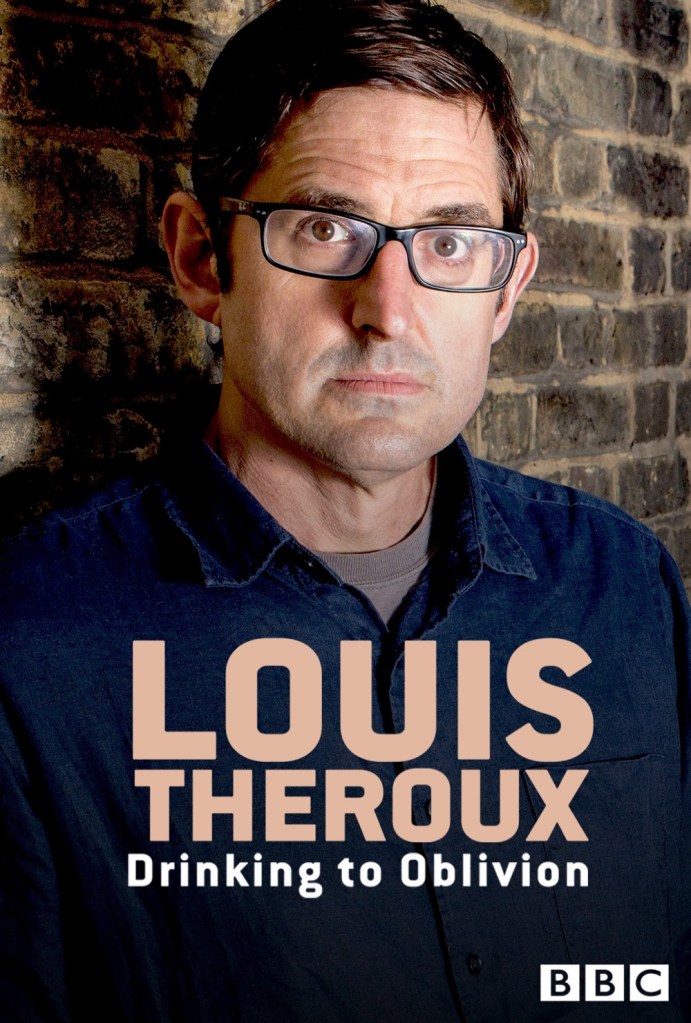
i’m drunk watching this. i can’t control it. every time my work week ends i’m so relieved that i drink until i’m pissed and i’m blacked out and i’m drunk on the floor. i’m so alone. i fantasize about telling someone, but i can’t. god i hate myself. please help. somebody help. i can’t see straight. i feel crazy. i feel insane. i feel like i don’t belong. like i can’t tell anybody. please help me.
Succession

i think truly the most beautiful, heart wrenching, connective thing i have ever watched. shiv describes logan as her ‘world of a father’… that’s how i see this show. it’s a world of a thing; a universe. not only is it living and breathing, but its creating matter of its own. its building stories and characters and memories and deep, hurtful, euphoric feelings that i don’t know i would ever feel otherwise. i’m so grateful this exists. i feel so alone, and these flawed, fucked up, wonderful people feel like my family. there’s such a shakespearean sense of tragedy here. in fact, it reaches out to you, tries to touch you, invites you along when you first sign on for another re-watch of the show. the inevitability of it is somehow comforting. even in the show’s warmest, lightest, most wholesome moment— the meal fit for a king scene— there’s a really palpable sense of the surreal. i think it’s the closest thing succession gets to a dream sequence; for we know that the inevitable is there. we know that tragedy is, as it always is, just around the corner. and indeed it comes in its sharpest and most pathetic depiction of the entire show. every sibling having a major meltdown during the final board vote. shiv sabotaging herself to save tom [in what i view as the most perfect culmination to their relationship], kendall baldly lying about murdering a kid then physically attacking both a pregnant shiv and an already-injured roman, and roman declaring what we the audience have known since the first episode of the first season, but the siblings have denied their entire lives: all this is bullshit, they are bullshit. in the beginning, succession is about exactly what its title promises: the succession plan of an american business dynasty based, largely, on the Murdochs. it’s evident that this was all the show had upon conception, for the characters were shallow, the dialogue was fast and sharp, but that was about it, and the storyline— at least through episode five— meandering and unfocused. but by the end of show, it becomes clear that this is a show about complicated, inescapable relationships. it’s about pain and trauma and denial. its emotional core centers around tom and shiv who, if season one had anything to say about it, should have been a sideshow to the real narrative. creator/writer jesse armstrong and director mark mylod had the brilliance to be beholden to nothing here. they followed the beauty, and it led them to really painfully places. i think the first time we see this is at the end of episode six, “which side are you on?”. kendall’s first coup attempt is [narrowly] smashed by logan, he’s subsequently and unceremoniously kicked out of the firm [read: family], and takes to wandering the avenues of the financial district looking like a lost, wounded puppy. it’s also here that the first non-original piece of music comes in. the needle drop, a union folk anthem from 1931 by florence reece, is so perfect because not only does it capture this new, sharp twist of mood, but it indicates a new direction the show is heading. this is armstrong and mylod saying “we know we have some of the best original music ever composed for the screen, but here’s something different.” the trajectory of the show is fundamentally altered and, i argue, takes off exponentially in terms of both quality and thematic heft from there. the next tier at which the rocket drops its booster is the season one finale at tom and shiv’s wedding, and the next is, in what might be my favorite episode of the show, the season two finale, “this is not for tears.” after that, its hard to pinpoint specific episodes as the show was operating at such a fever-pitch fast rate of striking gold, though i like kenny’s birthday, tom’s heartbreaking but ascendant betrayal in “all the bells say” [want to come with me, sporus?], and literally any episode from season four, besides episode one [which to me is more of a transition/prologue episode].
Undertone
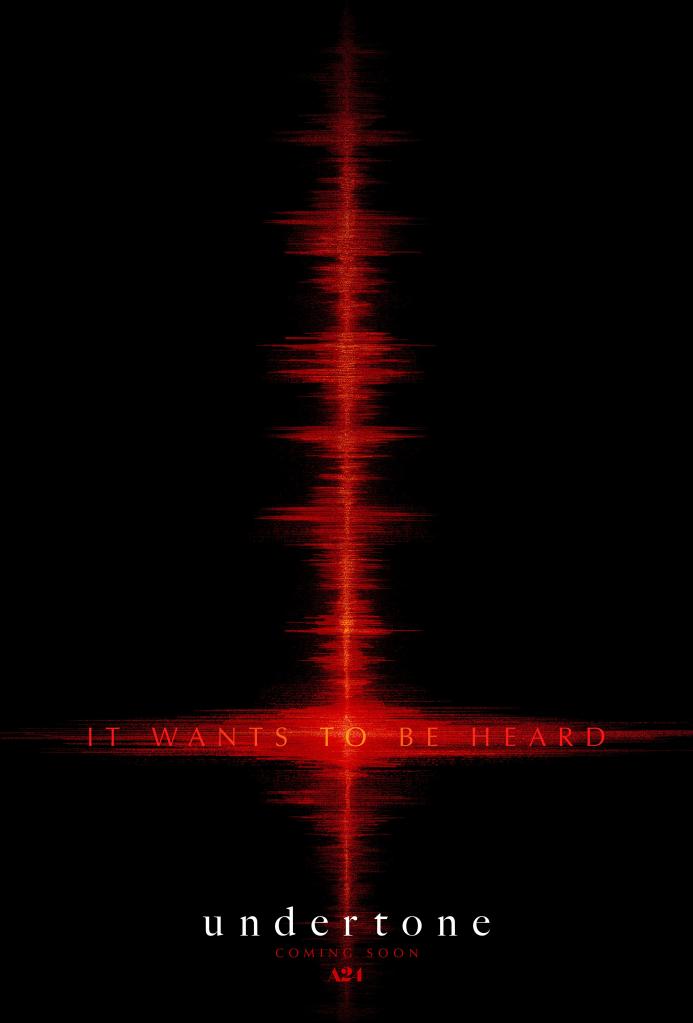
oh my god. that was a taut wire of a movie. wow. holy shit. i haven’t been that scared watching a movie in a long, long time. the final fifteen minutes were just me trembling, holding my phone at arm’s length, canted askew so that i was viewing at an angle, thinking over and over, “please let the credits roll, please let the credits roll, please let the credits roll.” amazing. absolutely amazing. they dumped so many horror tropes on their heads. countless jump scares were setup with obvious framing, utilization of mirrors, and flickering lights— only for nothing to come of them. they built up so much tension, never to release it. even the very end, when all hell finally, finally broke loose, the audience was blinded and only our ears were left to defend us. holy mary, mother of sound design. thank you for this. EDIT: it’s a few months later and i realize that roy lee is also executive producer on this one [see previous horror movie entries for my noted distaste for him]. oh, so i’m a hypocrite. but i also don’t know the full story either. maybe i’m an idiot, and maybe it’s just another example of incestuous hollywood cannibalizing itself.
Invasion of the Body Snatchers

yeah this was one was just ok. i feel like its age definitely shows. while the practical effects were awesome, and the 70s style of filmmaking was cool to take in, the narrative itself was slow and dated. i can’t help but feel that the story would have been much stronger if information was held back from the audience, thus setting up a thrilling, dark mystery to be solved. instead, we get a john carpenter-esque opening of some alien cobwebs on a cheesy set of a moon in outer space. overall, a bit of a drag, but i wasn’t sure what to expect anyway. i enjoyed the performances, sound design, and sole of the imagery especially. the humanoids being birthed from the pods were ultra creepy, and don’t even get me started on the dog with harry’s face…
The Iron Claw

man. i still remember so vividly the award season in which this came out. i was still working in the entertainment industry and living in la, and my then girlfriend and I would see everything. we even went to multiple premieres [notably the maestro premiere hosted by bradley cooper. sidenote: steven spielberg was there.]. but i skipped this one. i never saw it. anastasia did though. she even said “you have to see this movie.” but i avoided it. not consciously, mind you, but like the plague nevertheless. sure, i read the von erich wikipedia page so i could speak on them with some [feigned] authority. and you bet i was aware of rush’s tom sawyer featuring heavily in the movie’s marketing. but these things happen; in that, these things keep happening. a movie, tv show, album, game, etc. will come across my radar that seems perfect. more specifically: perfect for me. like it checks all the boxes. but i’m intimidated, i’m scared, i’m embarrassed. i feel shameful. for i know that in order to have something fill my cup so entirely is to come face-to-face with that essence that i feel so desperately thirsty for. simply, i’m afraid to look in the mirror. it’s easy to consume things that tangentially pique my interest. it’s easy to follow the nba playoffs from a friendly daily sports talkshow host via youtube clips. i don’t even like basketball. it’s easy to listen to dua lipa in the car on the drive to work. pop music bores me. but it’s not easy to go surfing. or trailrunning. or read through brandon sanderson’s multi-series-spanning cosmere book universe. or listen to a godspeed you! black emperor album all the way through on noise-cancelling stereo headphones. or watch a good freakin movie. and i don’t even like wrestling. but my god the filmmaking here. and the score. and the needle drops [the balls to play all 4:36 of tom sawyer interrupted mid-way through the film…]. and that incredible, raw, heartbreaking acting. rarely have i seen an ensemble cast so earth-shatteringly good. zac efron and holt mccallany were absolutely phenomenal. i never expected something like this out of efron. lily james and maura tierney, too, were forces of nature as the emotional undercurrent to the sludgy stream of tearless machismo flowing between fritz and his sons. really great movie. it’s sad that i waited so long to see it. but that’s how it goes sometimes.
Sorgoï Prakov (My European Dream [Descent Into Darkness])
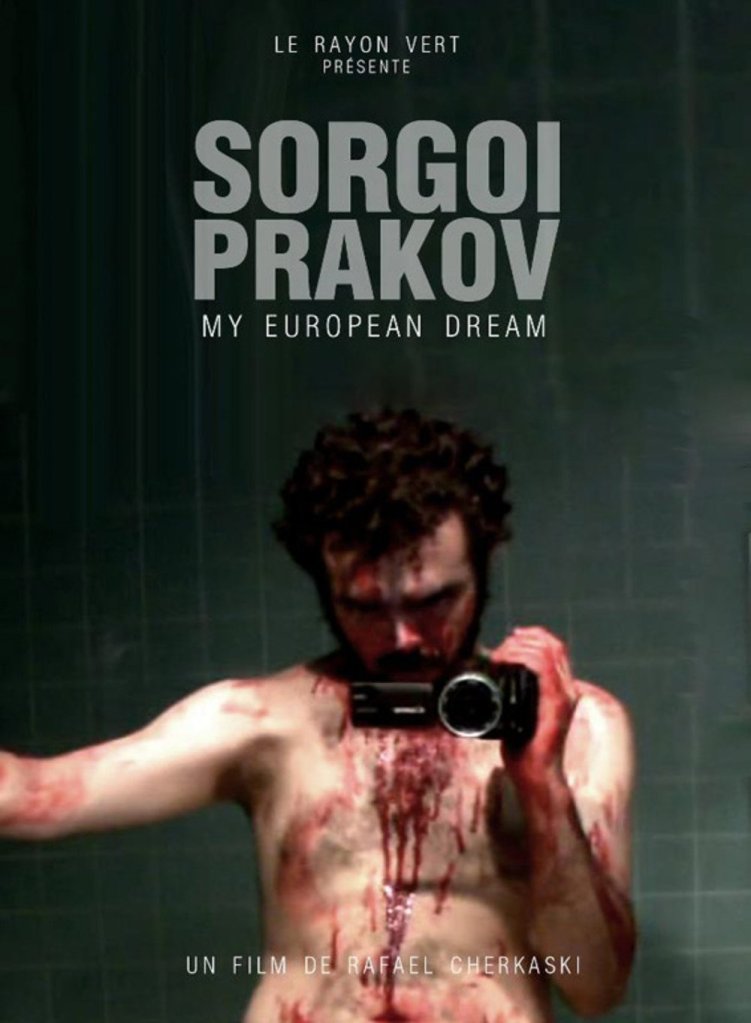
holy fuck. maybe the most raw, disturbing, horrific movie i’ve ever seen. so fucking real. wow. i’m in awe. this was amazing. it’s so disarming in its beginning that i’m in literal awe at the place where we end up. rafael cherkaski is a master. this was so visceral that i could feel it in my bones.
Hokum
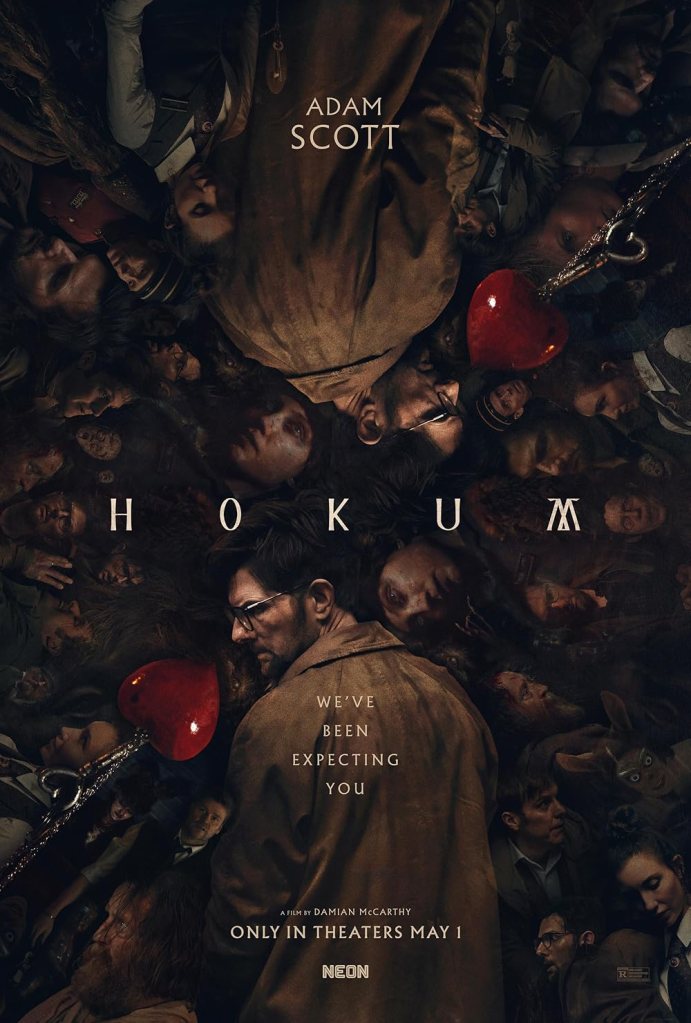
really disappointed by this one. adam scott was great, but that’s about it. super predictable tropes, a tired setting, and a super thin narrative. the most interesting part was the very beginning with the conquistador in the desert. everything beyond that became boring quasi-horror schlock punctuated by a few surprising moments that nonetheless turned out to be nothing. i guess i can’t expect too much from something produced by roy lee.
The Chair

woah. really fucking creepy. writer/director/editor/sound designer curry barker is so good. i was a little unsure at first about this one, primarily because the actors were pretty wooden in the “normal” scenes. they just look so los angeles actor-y. like to the point where i can’t even buy that they’re real people. but once the weirdness and the horror set in….wow. especially with old man franklin. on two occasions did i experience actual chills racing up and down my body. like an actual physical sensation. a simple premise in a bit of an eye-rolling subgenre that is cursed object horror, but done in a really cool way with some excellent filmmaking and awesome subversion of expectations.
Fly Me To The Earth

curry barker and cooper tomlinson strike again, this time with collaborator chris reinacher in the director’s chair. really impressive short film, especially for the youtube medium. the entire production was punching above its weight-class, especially in the set design, costumes, editing, and music. the narrative itself was fine, if not a little one-note, though it strikes the signature balance of curry barker’s comedy and horror tone perfectly.
The Dancing Boys of Afghanistan

“‘i would keep a boy if my wife agreed. if she didn’t mind, i’d keep one boy.’ ‘is it usual for a wife to give permission?’ ‘in afghanistan, husbands don’t listen to their wives. but I’m a cultured person. i discuss it with my wife first.’” the first time i heard about bacha bazi, was in the book bravo company by wall street journal reporter ben kesling. amid the narrative about a company of american paratroopers deployed in afghanistan, the practice of buying and selling young boys into sexual slavery was mentioned in a minor way; almost offhandedly, casually. but my curiosity was intensely piqued. this darkly taboo and secretive practice is rife throughout the region, in no small part due to war, widespread poverty, and extreme segregation of men and women. white outlawed by both the recognized afghan government and the taliban alike, bacha bazi is a tentpole of afghan and pakistani culture. this documentary is one of the most disturbing, raw, and real things i have ever seen. the latter two adjectives make it one of the best films i have ever watched. man, i mean perhaps the first adjective—disturbing— does too. in not many other pieces of cinema, tv, or even journalism do you feel like such a witness to actual events. even on the news there’s a sense of whitewashing, of bias, of being cleansed for the masses. so as not to offend. well, here, pbs frontline has no intention of doing so. it’s horrifying, but it’s also almost refreshing to watch something with such journalistic integrity. this documentary was made in 2010, yet it feels cutting edge today. my heart aches for shafiq and the other boys who are still trapped in sexual slavery. the looks on their faces as they dance for hordes of grizzled men with cracked skin and scruffy salt-and-pepper beards. as they are pawed and groped. as they answer interview questions via lines fed to them by their owners in husky whispers. what’s more is that some of them seemed happy to be there. or at least riding the high of attention and money and validation through nightly sex with various men that their brains have not yet been able to comprehend as simple gang rape. there’s a scene where an owner is attaching bells to the wrists and ankles of his boy. the straps and hooks and clasps, however, can’t help but look like manacles. but the boy smiles, begs his master to attach them quicker, tighter. and later the boy will tell the camera that he will soon age out of bacha bazi, and that his dream is to have his own stable of boys. 20 or 30 perhaps, if he can afford them. all for the use of his and his friends.
Zero Dark Thirty
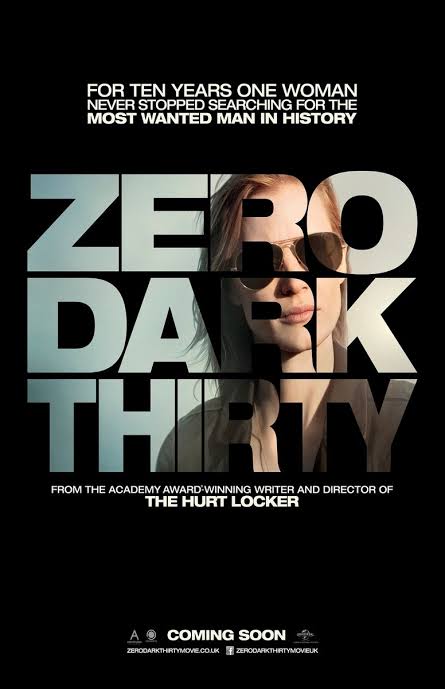
really fucking great. it’s one of those movies that starts strong, but then only gets better throughout. the uninterrupted, music-less sequence of the devgru guys storming ubl’s compound is unbelievably good. jessica chastain is fantastic as maya— that final shot of might be one of the best scenes i’ve seen her in [which is saying something given my lifelong affinity for interstellar]. this movie is such a feat of storytelling. it was hard for me to believe that this wasn’t based off of some tell-all book by an acclaimed journalist. i kept googling trying to find the book this was based off. but nope. the whole narrative came together due to the reporting/research efforts of writer mark boal. kathryn bigelow once again proves that she’s the master of the u.s. political war thriller. i’m amazed at the line she rides in all of her films— it’s not republican, flag-waving propaganda slop, but neither is it a surrealist anti-war think piece. her approach has always been documentarian and this film, moreso than hurt locker and house of dynamite reminds me of sebastian junger and tim hethetington’s restrepo. we as the audience are simply there.
1984
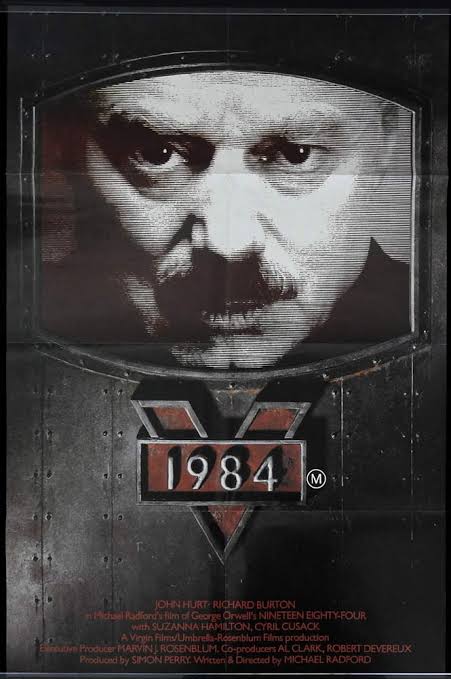
i’m watching this directly on the heels of reading the book for the first time. the book was a chilling, mind-altering, near-transcendent experience. the movie, however, not so much. john hurt was great as winston, and roger deakins’ cinematography was excellent, but the narrative really paled in comparison to the book. a litany of narrative beats and story details were moviefied, i.e. changed so as to make it an easier watching experience for a mass audience who is not so interested in critical thinking. they dumbed almost everything down thematically and philosophically-speaking. with that said, the tone and bleakness were captured rather nicely. indeed, the strongest moments— like the third act torture sequence— were taken directly, line-for-line from orwell’s novel. what was most upsetting, however, was the refusal to discuss the full meaning of ingsoc. in fact, there seemed to be a concentrated effort to avoid delving into the meat of english socialism, fascism, and totalitarianism in general. i mean, they even purposefully changed the common oceanic moniker “comrade” to “brother.” this feels deeply cowardly to me, as it was clear director michael radford wanted to remain as inoffensive to geopolitics as possible. by doing this he, and british studio virgin films, were capitulating to big brother. they let the thought police win.
Jacob Geller: Returnal Is A Hell of Our Own Creation
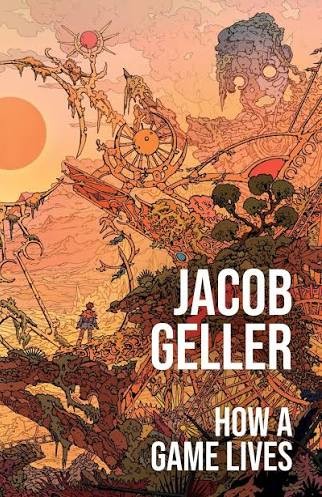
when it comes to video games, i severely handicapped myself. i always told myself that, despite how interested i was in channels like jacob geller and gamemaker’s toolkit and anyaustin and [hell, brother] even nakeyjakey, games were out of my reach. i told myself the reason why i couldn’t actually engage with the medium, why i couldn’t participate in this community, was simply because i was no good at them. and therefore i didn’t belong. i feel the same way now about surfing, and having friends, and finding love, and caring for myself. i wanted to play all of these super fascinating games, but i never let myself. i was afraid. i remember watching this video as soon as it came out and thinking, wow that looks so cool. though i guess i might as well let jacob spoil the story because i’ll never play it. it’s just not for me. i’m not good enough.… well, I just finished returnal. i did everything; i got the true ending, got 100% in every biome, grinded the tower of sisyphus until i max-leveled every gun. it was incredible. and what’s more? this comes on the heels of me finishing the witcher 3. what a feeling. it’s been some of the most transcendent moments of my life. validation. pride. immersion and acceptance. yes, i know! i sound fucking dumb! fucking silly! like a fucking loser but boy i don’t care. there’s something about being accomplished and proud and present. i never thought i would be in this position, where the wide world of gaming felt so accessible. but here i am, and i come back to this video with a kind of reverence. like wow, i can’t believe how far i’ve come. it’s a good feeling. for the longest time i couldn’t figure out what was wrong with me. i mean, i thought i was a capable person…but this whole gaming thing just didn’t click. i don’t know what it was. it was infuriating and shame-inducing. i felt like a fool and beat myself up over it. i guess now i think i was playing on large tvs in living rooms with other people walking in and out and i let my intense anxiety and shame get the most of me. this gaming thing felt private and intimate and so i would check out early. i’d bail. i found myself running away from the actual playing of games to go consume youtube content around them in secret. it’s true; i’d eschew the act of playing games– of participating in the conversation– for simply hiding and observing. i began to hide from games; from conversations; from people and life. yet I still loved the online discourse around culture, exclusively games. and my fascination, my almost taboo interest in games, led me to watching videos like this. but I shut off the part of my brain that actually felt like I had some agency. in a sense, i turned a two-way conversation into a one-way monologue. and every time that part of my brain tried to fight back, i pushed it back down and tried to bury it deeper. this only increased my intense feelings of shame and confusion. “you can do this,” my brain said. “no I can’t. fuck you. shut up,” i’d reply. but then I got a gaming laptop and set it up in private. I made it personal. It belonged to me and became something that nothing or no one could take away from me. just like all of these youtube videos that i watch in private on my phone under the covers when no one is looking. it was mine. in a sense, the mystique and fear and anxiety that i built up around gaming was itself my own hell. a product of my own creation. it’s a good feeling, being here. thanks, jacob.
Momentum Generation
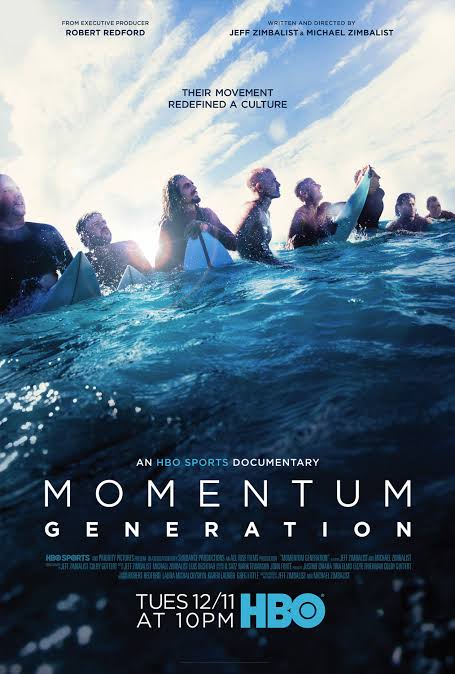
really wonderful documentary. such a testament to friendship. i loved how it slammed capitalism and toxic competition. the movie itself was a bit surface level, and was definitely produced with a commercial audience in mind, but it preserved the pureness and beauty of surfing in a really nice way. not the best surfumentary i’ve ever seen, but damn good. makes me wish for friends like the momentum crew. don’t waste your pearls on me, don’t waste your pearls on me. i’m only a pig, i’m only a pig, i’m only a pig. fuckin awesome music too.
Ocean’s Twelve
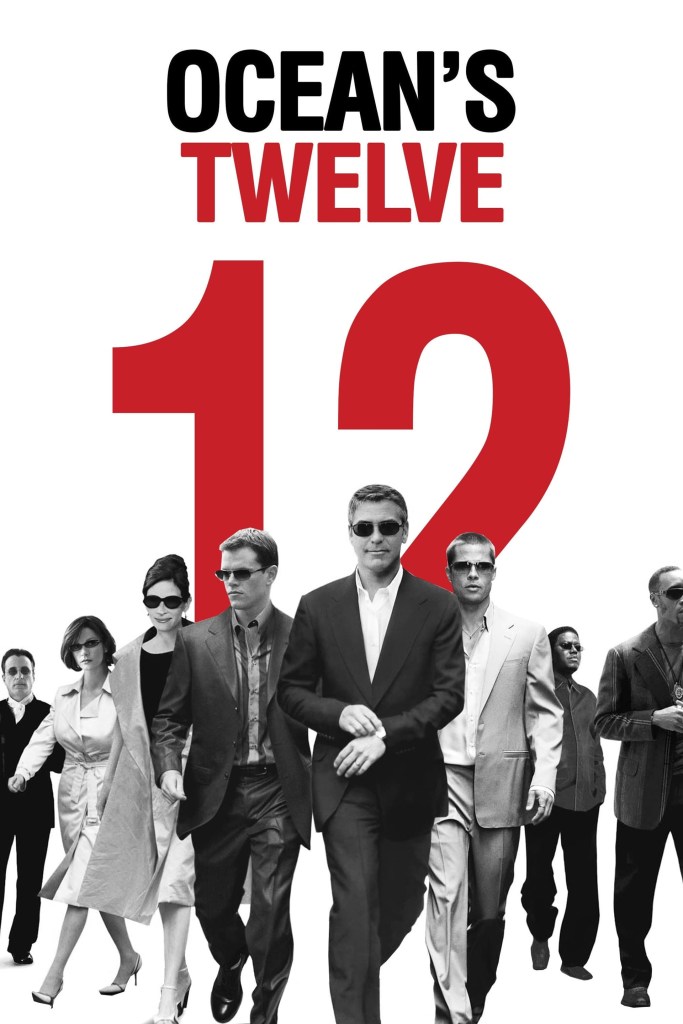
goddamn that was great. i really, really enjoyed this one. so stylish, so confident, so technical and humorous and just straight up fun. unlike the jaw-dropping magic trick pulled off in the finale of ocean’s eleven, the finale here is pure, self-aware madness. get this: julia roberts plays tess, who is pretending to be famous actress julia roberts, who runs into bruce willis mid-heist, who is then forced to talk to actual julia roberts on bruce willis’s cell phone to keep up the act. it’s amazing, it’s fantastic. and i mean that in the most literal sense of the word. this film is essentially a surreal heist movie; a caper-fantasy. it’s what thomas crowne would write if he suddenly really got into the stormlight archive. because of this, the poor reviews of this movie don’t baffle me. they’re disappointing to me, sure, but i’m not confused by them. i get it. such imagination isn’t for everyone. a word i kept seeing online to describe this movie is “smug.” i guess i can see it: soderburgh and company are definitely showing off, but hey, i can’t fault them for it. they’re going for something much more heightened than the first film, and to do so requires the filmmaking to be pushed beyond the max. with that said, i definitely don’t think you can do this more than once and get away with it. they exhausted the reservoir of awesome fuel. after this, they had to make something a bit more grounded. Which I think they did in the third film. indeed i feel like this trilogy got the indiana jones treatment [though i wouldn’t call ocean’s thirteen anywhere near as good as last crusade]. first one great; second a departure, though interesting and enjoyable in its own way; and third back to the winning formula that made the first one work. ocean’s twelve and temple of doom speak to the same thing about their respective directors: they didn’t repeat themselves. and i think that’s as noble a victory as you can achieve.
Pan’s Labyrinth
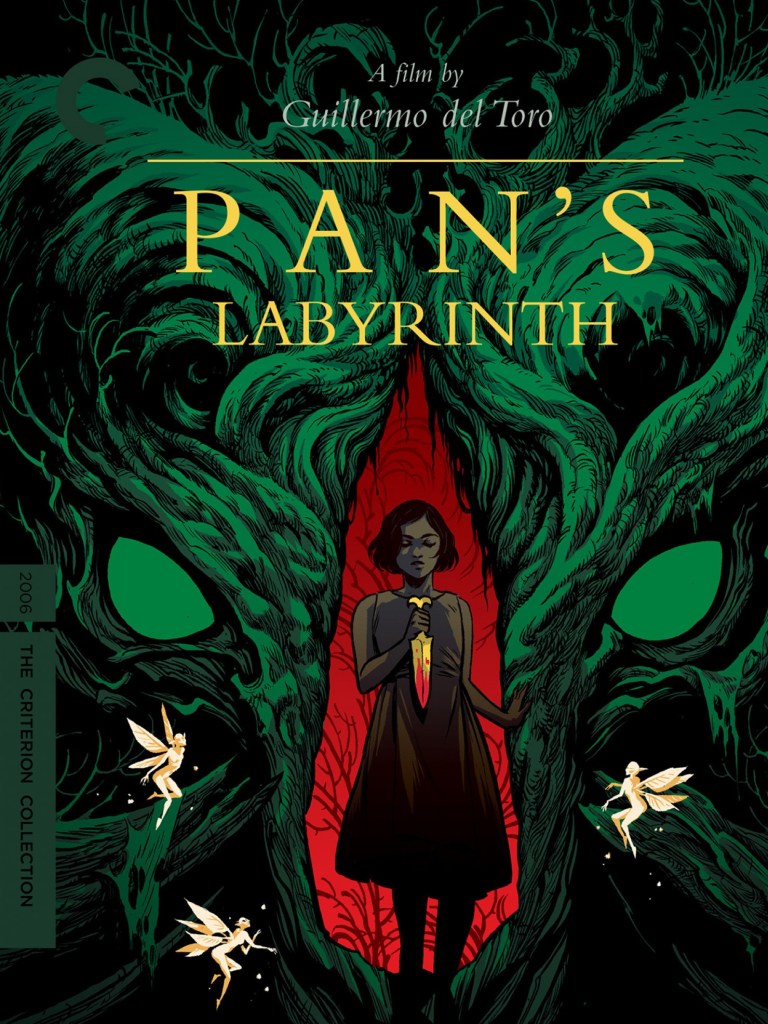
“you are princess moanna, daughter of the king of the underworld. you are not born of man. it was the moon that bore you. look on your left shoulder and you will find a mark that proves it.” and with that line, that incantation, filmmaker gueilmo del toro introduces us perfectly into one of the darkest, strangest, most imaginative fantasy narratives i have ever experienced. it’s the perfect portal into his world, and it comes surprisingly early in the film. we’re thrust rudely into the narrative just as ofelia was thrust into the labyrinth. we’re not sure if this is dream or reality, truth or nightmare. the border into this world is ill-defined, the crumbling stones of the labyrinth a blurred line from the fascist horrors of reality and the deeper, more sinister workings of the underworld. del toro crafted what is perhaps the perfect post-modern fairytale. it transcends the brothers grimm in its subversion of classic fairytale tropes, yet also is rooted in something so grimy. so human. but wow i’m so excited again to have found a movie that delights me. this narrative is so fresh, so lively and original. funny, considering it works hard to feel so traditional, so enchanted and fabled, so ancient. but i think therein lies just another layer of magic. this whole movie is showing you an illusion, then flipping it on its head. del toro lovingly doles out some of the most warm, comforting, cozy fantasy/fairytale tropes, then shifts them, spins them, refracts them, dims them, twists them up into something you’ve never seen before. like i said, it feels so unbelievably fresh. and sure the cgi is a little dated, but even then del toro uses the computer effects in such a way that their intrusion on the rest of the film is minimal. there’s a real lord of the rings-esque way to how much the practical effects— especially the makeup and prosthetics on the characters— elevate the film. in a way, this reminds me of brandon sanderson’s excellent, tress and the emerald sea. it too plays with familiar fairytale fantasy tropes, spinning the cozy and traditional into something grand, epic, and more than a little dark [though there’s a bit more humor in tress]. i wish i saw more things in this genre. i think it might be most common among animated films [anything from a nightmare before christmas to phil tippet’s mad god would count for me], though i haven’t seen many other directors take a live action swing in the horror-fairytale genre. certainly nothing that feels this fresh and modern. maybe it’s because no one but del toro could pull it off. there’s something really earnest here, something that really cares about storytelling. in the same way del toro uses fantasy to contrast fascism in the narrative, it seems like he’s using his native spanish language and the hills of his home country as a way to contrast the cinematic landscape and the rest of the entertainment industry as a whole. it’s a scary thing to do, swimming outside the stream, going against the norm. it alienates people, a lot of people, and it can be backbreaking work. what’s more, it’s heartbreaking work. no matter how comfortable being alone you are, be alone for long enough and your soul starts to get sore. which is bad news, because fighting the hegemomy is long, plodding, lonely work. for while the hegemony can commit genocide on the workers in a day, it takes years for the workers to whittle away even the smallest percentage of their power. it’s hard work seizing the means of production. it’s hard and it’s lonely and it’s strange and the rest of society won’t understand. they’re comfortable where they are and rocking the boat activates that fight or flight response that screams danger. so, what do you do? you hide it. you mask it. you disguise your revolution in the raiment of something else. a fairytale perhaps. a dark fairytale. and then you can introduce people to it. ease them into it. for there’s power there. and every source of power needs an invocation. “you are princess moanna, daughter of the king of the underworld. you are not born of man. it was the moon that bore you. look on your left shoulder and you will find a mark that proves it.” and now you can enter the labyrinth.
The Abyss

this was a super interesting watch. it was somehow fucking awesome and shockingly cheesy at the same time. it’s gotta be, in part, a symptom of the time [1989 sure straddles two eras that practically turned cheesy into an art form], but i also feel like there’s something else going on here. filmmaker james cameron hits on such a strange magic that i felt myself getting emotional whiplash. there was this incredibly defined dichotomy between being blown away by the technical achievements and the pitch-perfect setting, and being tempted to turn the movie off thanks to really cringey characters that are nothing more than broad stereotypes of whatever they thought would appeal to a blockbuster audience. it’s such a strange balancing act that i can’t help but be fascinated. there’s something about this film that won’t leave my head. it’s so clearly cameron’s attempt at making ridley scott’s alien, but underwater [strangely, it doesn’t feel like a re-tread of cameron’s aliens from three years prior. this felt very 1979 alien]. yet there’s an unshakeable sense of cool to it. i don’t know if i loved or hated this. it certainly wasn’t boring.
Flight
this reminds me of a relationship i had in rehab. full of so much love and compassion and understanding and bonding and trauma and codependency and guilt and using. god, there’s such a sadness. a profound, deep, diabolical sadness. it’s no wonder we can’t look in the mirror. for all i see is lies and depravity and shame. i see denzel washington’s marvelously haunted performance as whip and all i can think about is how romantic it is. god that looks nice. god if only i were him. god that drink looks good. i miss those days. the days when i was deep in a haze of prescription drugs and two-liter bottles of wine and a quart of vodka. and driving out past curfew of my sober living to meet up with the sex worker who stole my heart. during our second date to a farmer’s market in the pacific palisades— where i bought her an overpriced vintage tee from a streetside thrift shop— she wanted to fly off to italy and never come back. we snuck into a private park overlooking the ocean, the stupid-wealthy residents staring at us with hate in their eyes. dirty, broken, alive, magnificently young and drunk. i should have said yes. god she was gorgeous. shining black hair and a big smile and long legs and the pinkest, softest lips. and an addiction to alcohol and xanax and ozempic and men. i loved her. i fell so hard that i tore my eyeballs out of my socket. i masturbated all day and carved “fuck” into my thigh with a boxcutter in an alley behind the clinic. i miss those days. i miss when i could float free like an autumn leaf on the wind. now i’m full of momentum and life and responsibility and endless morals and regret. why was it easier? so much easier before when i was hollow? when, no matter how deep the water got, i could float?
Nirvanna The Band The Show The Movie

wow. i’m…i’m speechless. never before has my jaw been on the ground for the entire length of a movie. just emphatically, exuberantly, extraordinarily brilliant. this wasn’t so much a movie as it was a love letter to movies. it’s as if the mozart, the james joyce, the shakespeare, the modern master cut the blood out of their veins in favor of the exceptional everyman and shoved all their symphonies, scores, epics, odysseys, and masterwork poems to the side and instead wrote a simple grocery list on the back of a crumpled receipt. and in that grocery list, written in crisp and clean black ink capital letters is an ode to plot, to adventure, to music and friendship and life. this is a celebration of what it means to be creative and be risky. to climb the mountain and fall down, only to get back up and keep climbing. to reach the top of the cn tower just to jump off. to land on the skydome, only for the retractable roof to have just closed. to achieve fame and success and wealth, only to turn the clock back to when things were simpler, and nicer, and more pure and clean and daring and unintentional. i see here not only one of the funniest movies ever made, but also the culmination of one of the greatest media projects of all time. i see here the culmination of a labor of love that somehow achieves the unique feeling of being just for me, and just for you, and just for anyone that watched any of matt and jay’s stuff and connected to it. to their sisyphusean struggle. to their rare triumphs and many failures. to their humor and to their despair. to their loneliness. i see here something that belongs intimately to any person who chooses to pick it up off the street and wipe the dirt off. who takes it home and gives it a new coat of paint. who nurtures it and protects it. who learns from it and seeks to understand it. who loves it. i see here a mess of copyright infringement, blurred lines, gray areas, legal skirtings, inside jokes, lost money, broken contracts, and narrative threads that won’t be connected by an overwhelming majority of the movie-going public. i see here something that delights me, and i’m so grateful.
The Godfather Part Three

it’s amazing how bad this film is. there’s so much wrong with it from both a technical and a narrative standpoint, but one thing in particular sticks out. in parts one and two, you can count the number of times a character raises their voice on one hand. in fact, the same is true for loud sounds in general. gunshots, explosions, slamming doors, raised voices; all are used in incredibly precise ways that punctuate the story. in this film, andy garcia’s awful performance as vinnie features more shouting in the first 15 minutes of the film than the last two films combined. therein lies a core issue: this is not a study in subtlety, in softness, in shakespearean machinations and underworld doublespeak. this is a brash, uncouth studio-mandated parody of art. it’s a cheap knock-off. it’s a reluctant paycheck. it’s sad. and it’s oh-so hollywood. it’s a precursor to the studio slop we see 99% of the time today, and it’s only shocking because a) it predates the marvelverse era and b) it stands in stark contrast to two of the most highly-praised pieces of cinematic art ever created. the godfather part three is not the death of michael corleone, but rather the birth of modern hollywood cozening. i would recommend we pretend that this never existed, just like we pretend the entertainment industry is not a bankrupt trash heap feeding into a capitalist machine and stepping on the necks of artists across the world. but both things are impossible; we’re too addicted. the products are too good. i hate this movie, just as i hate hollywood. but i love movies. and i love watching them and escaping my life and being cozy and comfortable and alone. i want something that feels good all the time, that doesn’t come with strings, that’s pure in its goodness. i don’t know if that exists, and if it did, i don’t know if i could handle it. if i could understand it. maybe we only see what we are, and our consciousness finds comfort in that mix of good and bad, of clean and gross. because we’re all clean and gross. but that’s uncomfortable to think about. so i’ll just keep watching movies.
The Godfather Part Two
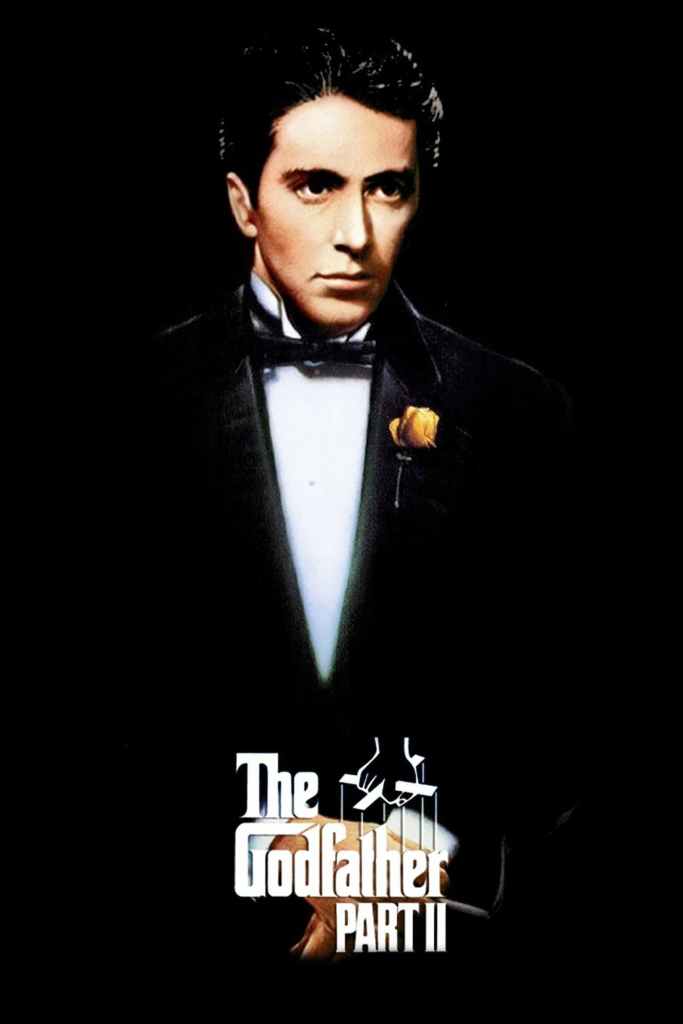
another masterpiece from coppola. in terms of technical brilliance, it stands on par— perhaps even exceeds— the first film, though i can’t help but find myself not as invested in this one. and i can’t exactly place my finger on why either. the move to nevada always felt like a departure like i wasn’t ready for. the change in setting mirrors michael’s evolution, and so in that i find myself longing for the smallness of the first film. of the family. of sonny’s rage and michael’s innocence. we watch as coppola turns our beloved protagonist into a creature we don’t recognize. whereas in the first film we were included in all of michael’s decision-making, in part two we are closed off from it. we don’t understand why he’s making the decisions he is, other than “business.” the audience is mirroring the rest of the family’s experience with michael: characters appear that we’ve never met, business deals are made that we’ve never heard of, doors that were once open have now been shut in our face. in a descent into a cold malice that is supposed to be the height of this character’s arc— the end of his journey. success. victory. yet it feels…bad. michael has eliminated everyone from his life. either dead, alienated, or so far under his thumb they might as well just be a piece of meat. coppola’s final shot is perhaps is most surreal, his most metaphorical, his most prescient: a young michael sitting alone at the table. everyone else gone. and the only thing we’re left wondering is: are we next?
The Godfather

of all the brilliance in francis ford coppola’s 1972 masterpiece, perhaps the most brilliant stroke is not including subtitles for the [many] scenes where the only dialogue is spoken in italian. because of this, the film’s entire plot is left to marinate in the tone of the characters’ voices and facial expressions. this is a story about feeling, about emotion, about rage and pain the loss of innocence. it’s also a film about beauty, for in all the darkness and underworld politics there lies such a raw, thick form of beauty and substance and style. without a doubt, michael’s exile in sicily is one of the most gorgeous sequences ever put to film. the bare, rugged, desiccated italian landscape is at perfect odds with bubbling urban sprawl of new york. so too is michael’s character arc contrasted perfectly with the rest of the family’s back in america. where things are only getting more complicated under sonny’s tumultuous leadership in new york, michael has found a kind of amnesiac simplicity amongst his ancestral town. even the score is stripped back to its most gorgeous, spotlighting michael and appalonia’s relationship, encouraging us to forget about the messy dealings of the five families across the atlantic. but of course this is coppola and co-writer mario puzzo’s greatest trick. for this, here, among the sun-bathed hills of sicily, is the film’s final loss of innocence. yet the fiery explosion that takes appolonia from michael and thrusts him back to reality, is also what shatters this ethereal sequence for the audience. nothing is sacred, no one is safe. michael’s emergence is quite literally from ashes. we’re witnesses to the death of the film’s only clean character, the only good character. it’s so complex, so subtle, so shakespearean. i always thought succession was the height of the macbethian family drama, but the godfather makes succession look like child’s play in comparison. there’s such a deep degree of subtlety that pervades the film; it’s as if the narrative exists in the depths of michael’s eyes. we knew we couldn’t stay in sicily forever, yet we still dared to dream. and like all things, this dream must come to an end.
It’s Such a Beautiful Day

at times i find it hard to be conscious. all i want is to close my eyes and sleep forever. to escape into a black void where stress is quiet and people are quiet and loathing is quiet and obsession is quiet and shame is so, so quiet. i want to amble up and down streets and alleyways, forest trails and mountain paths, lonely beaches at high tide where the waves surprise me by coming up to my knees and thighs and hips unexpectedly and shoving me sideways and almost toppling me over. i want to be adrift in a place with no fear and judgement, where my skin doesn’t feel so loose and baggy, where no one’s forcing me to eat. where thoughts about bodies and genitals and one-off comments from strangers and endless oceans of online pornography aren’t railroading my every waking fucking goddamn stupid worthless endless moment. i want to find a face amongst the blackness, but the closer i get, the less defined its features are. its vagueness surrounds me, envelopes me, comforts me. swaddles me like a baby and pretends i’m not there. that i’ve always been there. that i belong and i don’t exist. in don hertzfeldt’s singular masterpiece, i found this unconsciousness. it is sweet and sickly and funny and heartbreaking and razor sharp and vague as a newly fluffed pillow on a bed of fresh sheets and pine needles. hertzfeldt’s sad odysseus is bill, and bill doesn’t fight the world. he walks and he sleeps and he dreams and he makes his appointments and even when the world insists on fighting him regardless, bill ignores the lights and the flashing and the bangs and the sirens and the screams and the buzzing. bill is someone who never had a chance. he didn’t want one anyway. when bill was a boy, he dreamed of all the things he was going to do with his life. but now all those thoughts and memories blend in a strange cloud of vapor, whose boundaries are also vague and where some memories are made up. fabricated. invented by his brain to fill in the blanks. bill knows at some level that his memories are leaving him, but he doesn’t mind. everyone leaves him. and he leaves everyone. he’s going to live for the next thousand thousand years. all he’s got to do is escape consciousness one last time. and when he does, it’s beautiful. the tumor or the stroke or the aneurysm finally got him. or maybe some other heroic malignancy. lucky bill.
Sinners
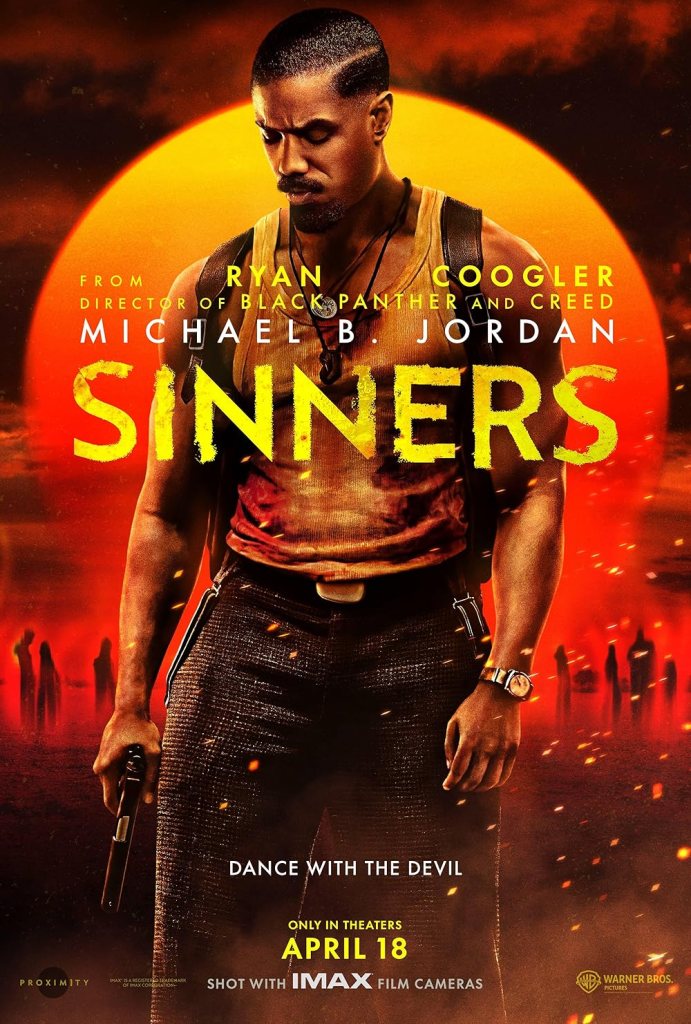
i liked this one; a surprisingly great horror/dark action movie. the depiction of the mississippi delta in the 1930s was amazing, and, historically, unlike anything i have ever seen. but what really shone for me in this film was the music. good lord the music soared and shimmered and crunched its way throughout the narrative like it owned the joint. composer ludwig göransson created a bluegrass score fused with decades of black music spanning decades of art and culture. it is truly, unabashedly wonderful to listen to. in fact, göransson’s music is so good that the highlight set pieces were not the action sequences, but rather the musical numbers. the vampires’ bizarre, haunting, ecstatic mass performance of the rocky road to dublin was awesome; it was like a dark ritual that you desperately wanted backstage passes to. but the crowning jewel of the film is, to me, sammie’s incredible genre-bending performance of i lied to you. the movement through time felt so dynamic and organic and out of place, yet was perfectly in sync and elevated the film. unfortunately, i think that the film as art-piece ends with the music and the [heavy-handed] social commentary. where these things end, the rest of this movie as entertainment begins. there’s nothing wrong with that, though i was left disappointed. i think that maybe this movie, viewed in tandem with the other films i have been watching lately [lawrence of arabia, one battle after another, and the film i would end up watching after this], failed to say something more than the sum of its [admittedly abundant] parts. i feel like the film fell back on some boring, basic action tropes in the climactic showdown with the vampires, and just became very hollywood. again, nothing wrong with that, but i think it speaks more to my growing exhaustion with the entertainment industry. the more i watch, the more things feel tired, overdone. predatory and for profit. cheesy. that’s why i get so excited, so giddy, when i find something weird and unique and full of passion and vague, unsuccinct answers to the question why. while i liked the movie– notably filmmaker ryan coogler’s direction and michael b. jordan’s admirable dual performance– i was disappointed to find that it lost some of the strange inventiveness that captured my imagination in the music and setting. to be frank, it was a bit of a let-down.
One Battle After Another
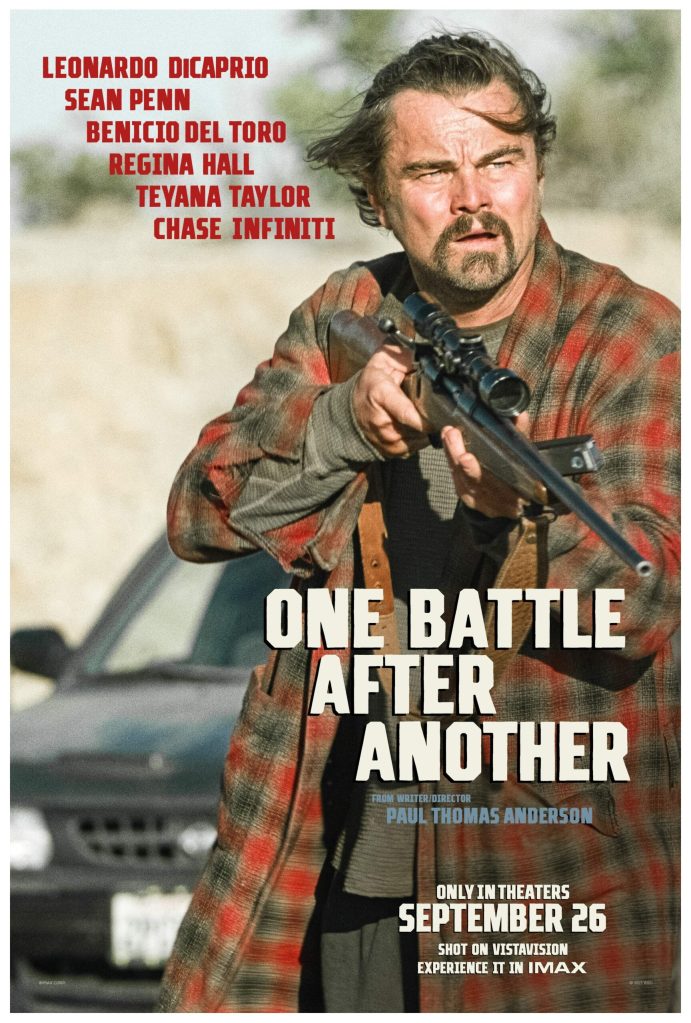
goddamn. almost two years ago, i remember reading a trade headline about paul thomas anderson and leonardo dicaprio teaming up for pta’s next movie. i was immediately excited. a match made in heaven, i thought. what could it be? there will be blood pt. 2? an epic drama about the la water wars? a political thriller set in the cosmere? then, about a year after that, marketing materials started hitting the airwaves for the movie and i thought…what? a modern action movie? i was devastated. what the hell were these two doing making something so dumb, so basic, so seemingly…mainstream. a year later, the movie came out to rave reviews. i wasn’t surprised, given the talent in front of the camera and behind it, but as i dug for the online discourse that backed up my disgust at the movie’s genre and subject matter [about which i knew scant…yet i still pre-judged], i was shocked to find nothing. even heavy-hitting news outlets that weren’t sympathetic to hollywood were praising the film. i even deigned to watch a bit of the trailer— a practice from which i tend to stay far away from— and still didn’t get it. yes, i’m sure it’s technically flawless. and yes, i’m sure the acting is great. but how is there a story here? how can you surprise me? with guns and the military and car chases…how do i know you to be different from the million mind-numbing pretenders that are shoved onto streaming platforms and thus in front of my face every year? and then i watched the movie. holy shit. what the fuck. this. this is how to make a movie. the marketing did this film no favors, yet i can’t blame them entirely. i truly don’t know how you market what makes this film worth seeing. every shot is raw and strange and heavy and hilarious and deeply engaging and meticulous and bursting off the screen. i don’t know how writer/director paul thomas anderson kept his sanity while making this film, for it’s clear that every single frame is labored over. i could say the same thing about composer/radiohead guitarist jonny greenwood’s pitch-perfect score. it’s perfection. this movie defies genre. it’s a political satire, but also a stylish caper, but also a high-budget action extravaganza, but also a cultural drama set against the backdrop of our the united states’ most incendiary, relevant sociopolitical moment. immigration. and freedom. and whiteness. and human rights. and family systems. and government corruption. and revolution. “the revolution will not be televised.” but maybe it will be filmed. for what pta did, and producer sara murphy, and leo, and sean penn, and chase infiniti, and teyana taylor, and benico del toro— man, i mean, goddamn. ¡viva la revolución!
Lawrence of Arabia

phenomenal. an absolute masterpiece. one of the best movies i have ever seen. when i was fifteen years old, i read hero, a tome of a biography on t.e. lawrence written by michael korda. it still sticks in my mind as one of the best books i have ever read. there was such a sense of adventure and magic and intellectual, idealistic heroism, all played at odds with complicated geopolitics and a muddy colonial legacy. what’s more, it illuminated anti-hegemonic structures by painting the sykes-picot agreement as evil as it is, by engaging in a discussion on the brilliance of lawrence’s newly-invented brand of warfare [now, auspiciously, dubbed guerrilla], and by drawing reverently from lawrence’s autobiography/seminal book on philosophy, seven pillars of wisdom. but despite all that, i never watched the movie. actually, i started watching the movie; i made it past the minutes-long black screen overture, i made it to the famous match-cut of the match flame with the desert sunset, and then bailed. frankly, i didn’t know what i was watching, but i knew it was over my head. indeed i was turned off, too, by the bedouin tribesmen speaking the king’s english with vague non-white accents. i think i used that as my excuse to turn off the film. i didn’t have the courage to say “i don’t get it.” nor was i brave enough, then, at the age of fifteen, to muddle through the near-four hour runtime, let alone dive into the film study required in order to gain the necessary cinematic acumen. so, here i am, almost twelve years later, late to the party, but nonetheless with my socks blown off. wow. just wow. yes, the tribesmen’s perfect english is eye-rolling; and alec guinness in brown face is, to put it nicely, outdated and problematic [turns out, a lot of non-arabian actors were in ethnicity-altering makeup for this film], and sure, the most screentime a woman has is face down, dead on the ground as a background extra…. what was my point again? ah, right: holy shit is this film an epic. filmmaker david lean’s crowning jewel is this film. peter o’toole’s performance as lawrence is at once exuberant and shattering. the character’s emotional arc is one of the best i have ever seen. it’s so thoroughly, painstakingly developed. we are immersed in every sandy trudge, every booming gunshot, every shrill scream, every dry thwack of the herding stick on the camel’s wiry hide, every desperate raspy slurp of water, every brackish tear that rolls down lawrence’s filthy face as he realizes, truly, how much blood this false dream of a united arab republic will cost. after watching this, every film, no— every story— featuring the desert heavily as a setting seems a parody. for here, lean portrays the desert not as a setting, but as a character itself. this is accomplished in no small part due to composer maurice jarre’s transcendent score and cinematographer freddie young’s breathtaking, eye-bugging, neck-snapping images of the desert landscape. star wars, indiana jones, dune [the shitty one], dune [the good ones], avatar the last airbender, the wheel of time [the aiel tribes specifically]— all owe a debt to the language that lean, jarre, and young created. but what’s even more remarkable, is that the narrative threads these more modern projects harness and weave [i.e. man walks into the desert alone, man walks out with an army], actually happened. thomas edward lawrence really did much of what was seen in the movie. not only did he singlehandedly help win world war one, but he singlehandedly altered the shape of twentieth century geopolitics. the modern so-called middle east [try southwest asia, friend] would not look the way it does without lawrence’s influence. be that for better or worse. what most historians agree on, however, is that his intentions aligned with those of the bedouins. like the film depicts: he desperately wanted to give them damascus. and it’s also true that he was horrified by the underhanded agreement by britain and france to carve up the ottoman empire for their own gain. it’s likely that he knew exactly what that portended: the world’s powers lapsing right back into the behavior that led to the first world war. colonialism. alliances. militarism. nationalism. so of course the horrors that happened once, unchecked, would be sure to happen again. i’m glad i turned off this movie, less than fifteen minutes in, more than a decade ago. from a film-criticism standpoint, i think i knew i wasn’t ready. but now i also think i wasn’t able to process the complicated implications of the film. it’s hard for a kid to reconcile that much good and that much bad and that much gray all balled up into one thing. the racism and the sexism and the colonialism, but also the technical achievements and the artistic achievements and the narrative achievements and the intense cultural impact it’s had on media since. and we can’t forget about the head-scratching, head-bursting geopolitical roots within which this film has entangled itself. i think in order to get a deep understanding of anything, you must understand the context. and any context worth digging into, it’s worth digging into deep. that’s how i feel after watching this film. i’m dug in deep. buried up to my nostrils. there’s hard-pack dirt piled up all around me and the light is fading and i can’t find my shovel and i’ve lost which direction is up and which is down. it’s like i’ve wandered with lawrence deep into the desert and there’s no way out. but that’s ok. the world’s been screwed up for ages anyway, and i fear man is far past redeeming. as ali says, “i fear him, and love him. how much does he fear himself that hates himself so much?”
The Maltese Falcon

endlessly quotable, cooler than cool…an iconic film all around. i can’t know how exactly this was received in 1941, but humphrey bogart’s performance is so instantly iconic that it makes sense this film is legendary. everything about it is dark, crisp, moody, and clearly a beacon of what it meant to be a man of the era. with that said, that’s exactly where the film shows its age today. its depiction of the miserable treatment of women is hard to reconcile as a modern viewer, and thus dates the movie severely. you definitely have to put on your film-student-critical-thinking hat to get past some of the themes. in a sense, the film is like the falcon statuette itself: its jewel-encrusted exterior faded and covered with a dull enamel, coveted by a dying breed of man, ultimately proving to be false. a hollow dream; out of date. but yet there’s an element of universal panache to it that adds a surprising sense of fantasy that’s echoed today. it’s an escapist masterpiece, meant to transport audiences into an idealized world echoing our own. to me, this echoes greatly the modern superhero films produced by marvel and dc. yet, unlike the bulk of cgi comic book catastrophes today, there’s a gentle wink-and-nod in the maltese falcon. it’s subtle and it’s cheeky and it knows exactly what it’s doing. in fact, i think this film is surprisingly self-referential. after all, the final words of the film are spoken by bogart’s effortlessly suave sam spade when asked about the fake treasure he’s holding. weighing in his mind all that has happened, that at least three people have died for this false idol, he tosses the worthless, lead-covered piece of junk from hand to hand and says: “oh this? this is what dreams are made of.”
The Autopsy of Jane Doe

overall a pretty fun watch…despite the fact that more than half this movie is made up of cheesy bullshit. my real question is: why is it that we must lower our standards just to enjoy so many horror movies? the unique aspects of this movie were genuinely horrifying, specifically the incredibly life-like human doll [?]. puppet [?]. meat sack [?]. i mean man, that was visceral. and the mystery slowly unraveling as the father and son coroner team cut the corpse open was both riveting and deeply chilling. but unfortunately that was about 35 minutes of the movie’s runtime. the rest was a mix of an eye-rollingly cheesy setup with the son’s girlfriend, and a contrived haunted house third act where the ghosts spring around every corner to attack the terrified protagonists. the meat here was great, though short-lived, and the rest of the film couldn’t support it. not even a rock-solid brian cox could save it. oh well. i admit, perhaps this wasn’t the best thing to pivot to after the testament of ann lee and the dirties back-to-back.
The Dirties

i just feel like i missed out on all my development. “you’re a pussy dude. you’re a big fucking pussy. you talk big but you don’t do shit. that’s a pussy.” this line, spoken by owen in the emotional climax of the film, comes after matt gets upset with him for not sharing his enthusiasm when he finds out [via a book on columbine] that he might be a psychopath. matt has no friends yet thinks he’s better than everyone. he throws himself into filmmaking so as to avoid the hollow shell that is the rest of his life. there’s an excitement in his eyes, an almost inflammatory, surgical sense of relief when he realizes he’s likely a psychopath. finally, a label for me. finally. not so alone. you can hear matt’s heart beating wildly— pounding, thumping at well over a hundred beats per minute— through the wireless mic clipped under his shirt. his breath is ragged and he’s staring wide-eyed as owen storms out of the basement. it looks to be a breaking point for matt, who before this seemed so confidently, wildly in control of the film’s insane narrative. and like matt’s uncharacteristic loss for words when his best friend stands up to him, we as the audience are stunned. for the first time we’re left wondering: oh god is he really gonna shoot up his school? i closed my eyes speechless once the credits rolled. this is perhaps the best ending i have ever seen. the smile, the body language, the gun in his hand and the bright neon orange shirt reading “we’re just here for the bad guys.” and the question. that sincere question. he has no idea of the monster he has become. or perhaps always was. matt is so perplexed at the rest of the world’s rejection of his depravity. he’s clearly been neglected and abused, but got so good at coping that no one bothered to check in on him. i see such a deep loneliness in him. i see a little boy bleeding from multiple wounds. it’s a death of overwhelming innocence that has been scrubbed with so much soap and lye in an effort to get clean that there’s nothing but raw, frayed, unfeeling nerve endings. and there’s a beauty in that numbness; almost a sweet cuddly blanket of innocence and guile. for where owen was bullied and suffered and loved and stumbled and processed and grew, matt removed himself altogether from emotional society. he had already made himself an outsider. throughout the course of the film, owen develops into a young man navigating the trials and tribulations of high school, while matt sits by and watches. he can’t understand why things aren’t aligning with the cinematic reality he had created for himself. i feel like that matt. i know him. i am him. i crave that aloofness and i lust for that outside omnipotence. oh to be above it all. godlike. deific. with a gun in my hand— barrel still hot to the touch— and a confused smile on my face. just like sweet, misunderstood matt. where did everyone go? why don’t they worship me? they’re all just stupid anyway. in a catalogue of great films, i believe this is filmmaker matt johnson’s best. it’s certainly his most real. and for that i want to cry. but they wouldn’t understand anyway.
The Testament of Ann Lee
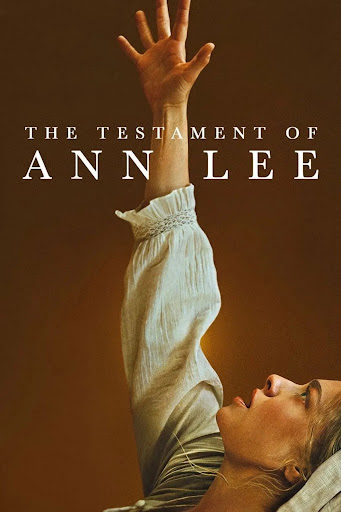
wow. just, woah. this was amazing. the end credits tell us that in 1840, the shakers movement hit a peak population of 6,000. after the names of the principal cast, the end credits then tell us the population of the shakers movement as of july 25, 2025: 2. this is a film about death. about dying and fading and losing humanity while paradoxically trying and clawing and screaming for salvation. it ends with the half-blinded words of a half-blinded zealot sitting next to a newly-filled pine coffin in the middle of the new england woods. it begins, too, with death. i have never before seen a more graphic portrayal of the death of infants, and the toll that it takes on a mother. amanda seyfried’s ann lee, writhing in pain, screaming naked. her eyes rolled into the back of her skull. the midwife wrapping her fourth dead baby up in a dirty cloth to be disposed of. her lifelong best friend pleading with her to stop bleeding, desperately pressing a cloth to her vagina only for it to become instantly drenched in blood. all of this seen through an unflinching full-frontal camera shot. it’s stark and uncomfortable and the film doesn’t let up. yet this movie is also full of the most life i have ever seen. twitching and rattling and jerking and stepping and throwing and billowing and twisting and spinning and quivering and writhing and shaking. total exuberance in shaking. this is a story about a woman’s deep trauma in a time where she couldn’t acknowledge it. instead, ann lee translates this trauma into a unique, reactionary worldview, defined by a joyous, intense, conflagrating worship of god. yet it’s a movie so deeply human that its emotion struggles to be conveyed through conventional cinematic means. instead, filmmaker mona fastvold [and her partner brady corbet] spend more than half the film’s runtime in a less conventional medium, especially for a stark, ruthless historical biopic such as this. singing and dancing and music. oh, the music. the music is some of the best i have ever heard in a film. aching piano and strained, razor sharp menacing violins and haunting chorales and harps and bells and chimes and what i can only assume was a marimba and an electric guitar for god’s unholy sake. this wasn’t a movie, but perhaps rather it was closer to a service. an experience. a receipt of a gospel in front of the altar. a preacher moaning and shrieking and spitting her head off crying “god is both male and female!” daniel blumberg’s score was eerie and modern and ebullient and cynical, yet was also deeply traditional, having adapted many religious songs of the shakers movement into stunning pieces for the film. there’s something chilling about knowing what seyfried is singing and chanting to be real. it feels otherworldly. funny, considering it’s the most historically accurate parts of the film. perhaps that’s what adds to the uncanniness. movies– especially popular, hollywood big-budget things– purport to offer an escape to an audience. i think that’s why we as a culture are addicted to them. but this movie, as seen by the traditional songs and unflinchingly graphic scenes, has no interest in offering an escape. the filmmakers do not make this an easy viewing. seyfried’s performance is unbelievably good, undoubtedly a career best for her. lewis pullman too gave a performance of a lifetime. yet it says something about the movie that they melt into the hyper-reality of the narrative. the music and the singing and the shaking sapped every bit of life out of all the actors, not just those at the top of the call sheet. there was no room for anything but blood and pain and rape and violence and worship and euphoric movement. the performers gave such a life to this film. there was room for nothing else. nothing. let alone hollywood’s bullshit and cheesiness and insistence on producing a song with the same tired four chords we’ve all heard before. instead, like many post-modern musicians today, the film eschews melody in favor of atmosphere, of noise, of texture. this is only bolstered by the bizarre, striking, unfamiliar, almost uncomfortable choreography. it’s a tangible mix of orgasm and exorcism, of electrocution and sine-wave oscillation. the constant thrumming of the film’s most dazzling scenes match that of a heartbeat, with the performers, music, and camera movements all working in time with the steady pulse of breath. breathe in, breathe out. breathe in. hold. count. one. feel. hold. two. do. hold. hold damn you. three. be. breathe out. a place for everything and everything in its place.
Atropia
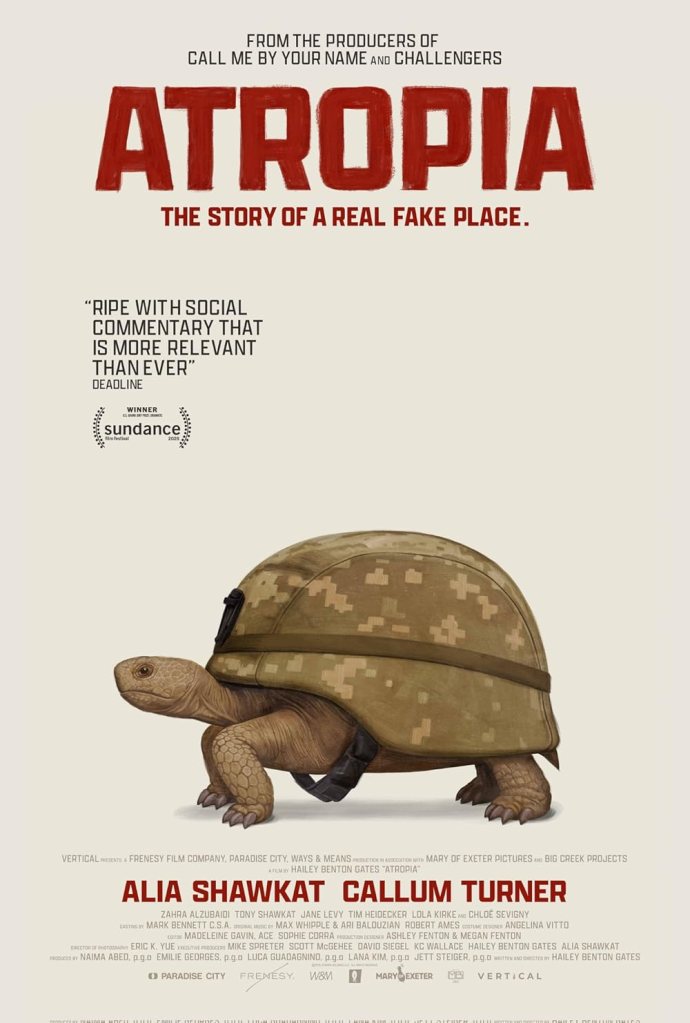
hmm. unfortunately this was bad. like really bad. it’s essentially an inflated version of filmmaker hailey gates’ short film with a higher budget and a lot more bullshit, including a really bizarre, silly, and thin love story that takes over the plot. this feels like it has the potential to be such a uniquely cool concept, but just falls flat from every possible filmmaking standpoint. like the short film, the one bright spot is alia shawkat as the protagonist, though even her energetic performance quickly becomes cheesy after thirty minutes. the satire attempting to criticize the u.s. military and bush’s war on terror doesn’t even come close to hitting the mark, and ends up just making a mockery of the soldiers and civilians alike. the narrative stakes are muddled and confusing [again, like the short] and the film lacks any tension. this felt amateurish and boring. i was looking forward to this one, especially after i thought i felt something gestating in shako mako. too bad.
Shako Mako

an intriguing short film from writer/director hailey gates that looks to be the seed for her later film, atropia. i’m almost wondering if this was a proof of concept of sorts that gates pitched around for production funding and distribution. the protagonist, played by a stunning iraqi-american actress named alia shawkat, is magnetic in her role, carrying what is otherwise a dull script and wooden supporting actors. unfortunately, i feel like the film’s theme– that even the extras playing iraqi women at an army base in california are relegated to the background– was not quite realized. i didn’t quite grasp the stakes: shawkat’s character is trying to leave her job at the base, but why? she seems to like it, and even said she uses the time to sharpen her acting “tool.” this had the mellow feeling of a day-in-the-life, so the [seemingly] shoe-horned-in secret video camera clashed with the rest of the film’s tone. the narrative shined in the bi-lingual conversations between layla and noor, yet, interestingly, fell flat when her male counterparts were onscreen. overall, the highlight for me was the strange and sudden shift to a thermal imaging camera depicting the cast party. this was unsettling and gave a chilling sense of voyeurism– of being watched, of being preyed upon– to the scene. unfortunately, however, this ultimately went nowhere. curious beginnings, and there’s clearly something deeper here. i’ll have to watch atropia to see.
Operation Avalanche
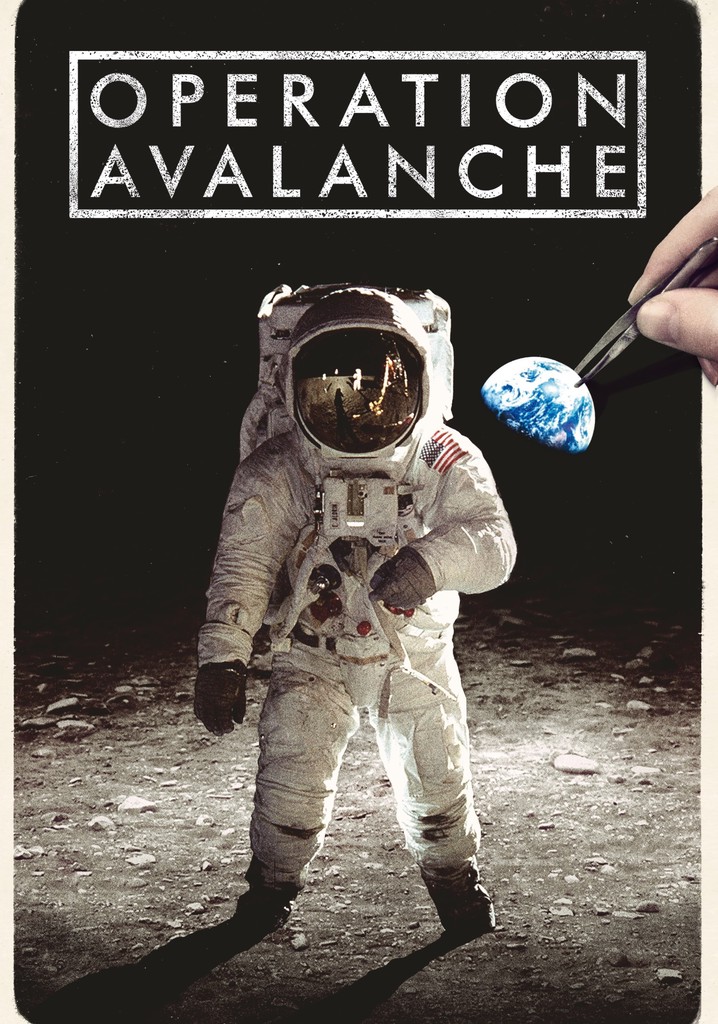
writer/director/cinematic illusionist matt johnson’s wildly zany revisionist re-telling of the moon landing is perhaps the greatest compliment one can pay to the actual historical achievement. by spiraling deeper and deeper into the fake-moon landing rabbit hole, johnson’s satire points out how monumental of an achievement the apollo 11 mission actually was. one of the most poignant moments illustrating this is when johnson [who, along with the rest of his mockumentary team {including nirvanna the band the show alums jared raab, andy appelle, mark boles– catch him in episode 7 of the web series– and even good old jay mccarrol credited as the film’s composer}, play themselves in the movie] and team are trying to come up with a quippy headline for news outlets to use, and in essence end up reverse-engineering armstrong’s famous line upon touching down on the lunar surface. “no, no, not a step…a uh, uh. hmm. oh! a leap! a towering leap! it’s like a jump, a leap forward for everything…” it’s so ridiculous; it’s perfect. and i think therein lies matt johnson’s genius. whether it be in operation avalanche, or blackberry, or in the seminal, post-modern, hyper-real, mind-bending, nirvanna the band the show [i missed the movie in theaters so am waiting for it to come to streaming], johnson twists reality into something fantastical, yet benign. the magic is that it’s utterly recognizable. it’s as if you were walking by and wouldn’t notice anything out of the ordinary, until you stopped to take a closer look. only then would you notice that all was not what it seemed. there’s a sense of the uncanny in all of johnson’s projects. my relationship with them seems to be fluid; my perception of what’s real and what’s not seems to be constantly changing. like a magic trick being pulled off before your eyes and you’re trying to spot the moment of prestige. where did the illusion begin? where did it end? did it ever end?
Last Call
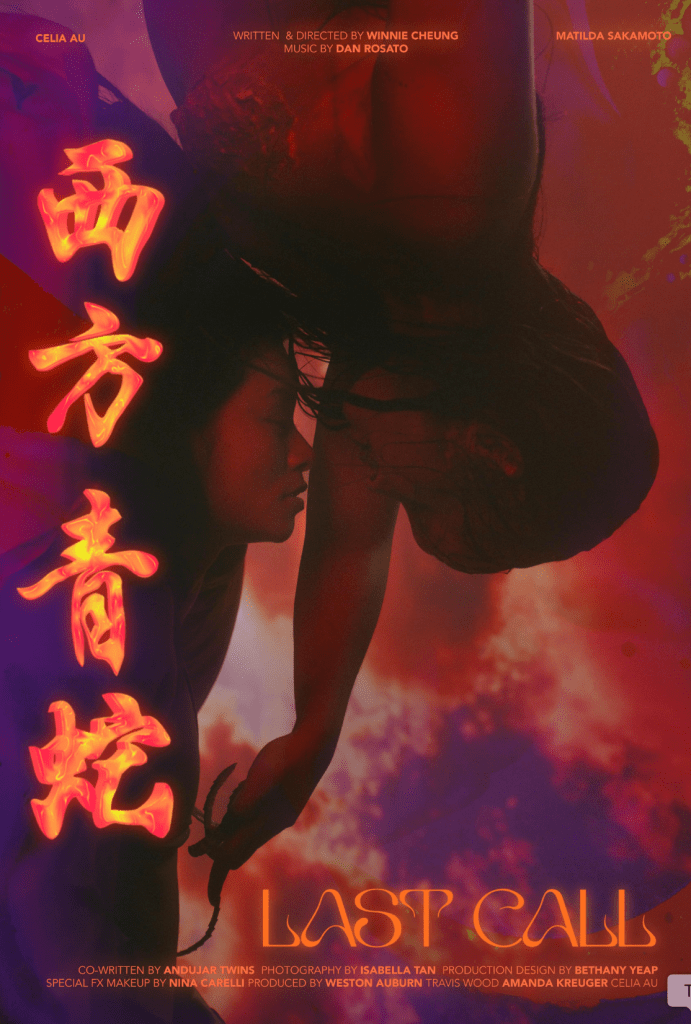
man, i haven’t watched anything in a while. i’m not sure why. just the thought of sitting down to watch something, anything, has felt exhausting. i wouldn’t even know how to begin to choose. nothing has seemed worthwhile, meaning: nothing has seemed like it had the power, the magnetism, the gravity to to break through the numbness. that’s ok. i’ve always let movies, music, books grab me when the time was right; when they chose to, not me. too many times in my past have i tried to force consumption of a medium. this has always ended poorly. thus today when last call grabbed me, i knew it was time. in a sense, this was the perfect film to get me back into the swing of things. writer/filmmaker winnie cheung’s self-stylized “acid folk thriller” is strange and loud and neon and fork-tongued awash with motorcycle engine revving and melted-bubblegum cgi landscapes that burst from the screen like a painful orgasm. i loved it. permanently burned into the film are subtitles in both english and cantonese, stylized in crisp, gothic lettering that make them look more mise-en-scene than dialogue aid. everything about this short film felt original and creative and just so anti-hollywood. the sound design in particular was spectacular. bravo on making me feel elated, scared, and pressed back into the cushions of my seat all at once. the visuals too were mind-bending. every shot looked meticulously visualized, but not via a storyboard, but rather a street artist’s neo-pop rendition of an acid trip. refreshing. ecstatic. excellent. i’m curious to see what cheung does next. watch the film on winnie cheung’s website for free here. no this is not a sponsorship.
Citizen X

this one fell flat. a plodding pace, lethargic performances, and the blandest set design i have ever seen all made for an extremely boring watch. the story itself had the bones for an interesting narrative– made more so by the fact that it’s based on actual events– but unfortunately the film translated none of this intrigue to the screen. even the actors seemed like they didn’t want to be there. donald sutherland and stephen rea stumbled their way through horribly cheesy russian accents with glazed, half-lidded expressions on their faces. i’ll give it a little credit, as it was a [presumably] barely-funded television movie for hbo [back in 1996 before huge money found their way into the mainstream tv pipeline], but sadly this has done more to make me distrustful of tv movies more than anything. oh well.
September 5
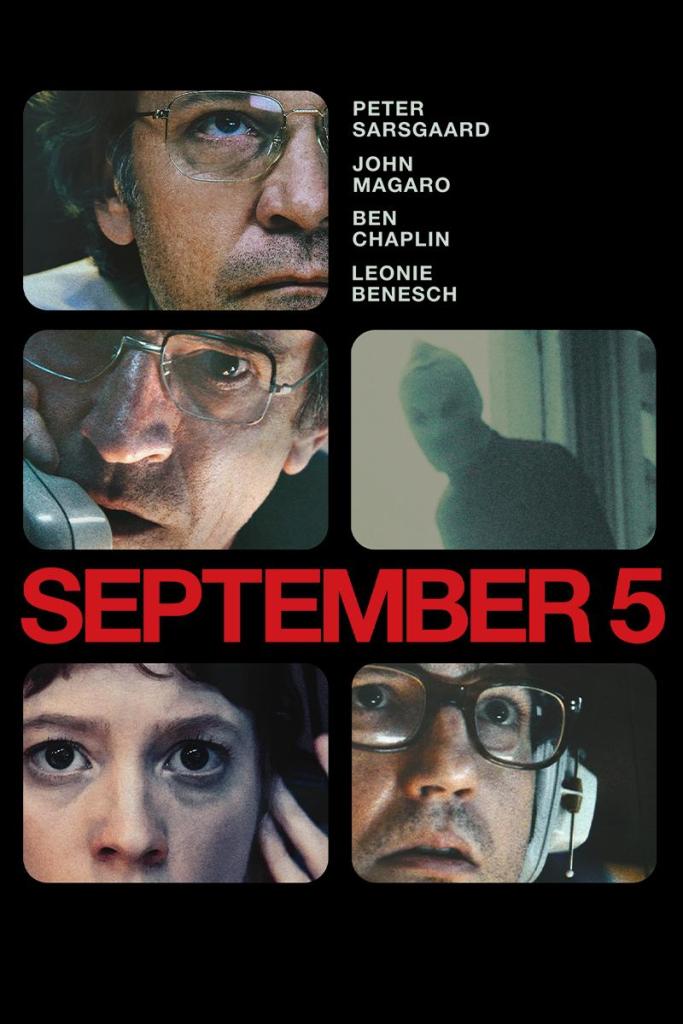
wow. ridiculously intense. incredibly done. the writing especially absolutely planted the audience in the ground zero of the abc broadcast control room. i thought john magaro was great in his small– but super memorable– supporting role in the big short, but here he was on another level [note: regrettably, i still haven’t seen first cow. hopefully i can change that soon]. he was fantastic as geoff mason [who, interestingly, was a co-producer on the film]; every line was dripping with frenetic, fly-by-the-seat-of-your-pants tension. i mean, the events that were unfolding and the fact that the broadcast team just stumbled their way into overing it live for the first time ever in human history…chilling. supremely bone-chilling. 900 million watched an act of terrorism punctuated by the deaths of eleven people on live television. unfortunately, this only heralded in the live news coverage age, the zenith– or nadir– of which to come 29 years later with 9/11. i was loosely aware of the 1972 hostage crisis at the munich olympic games [it happened well before i was born], but i was not aware of the grim outcome. my viewing experience of this movie was actually enhanced because of that, as i lived with every roller-coaster-up-and-down the real-time narrative threw at me. insanely enjoyable watch, and really cool to see a german production go all out to nail the muddy heroics of the predominantly american abc sports broadcast team.
Beau Travail

sensual and slow and erotic and frenetic and flowing like slow moving water churning through salt-spackled crags under a roiling desert sun. this film– if that’s what you would call this nearly dialogue-less trance of scene and sound and strange, bereft feeling– was more poetry than film. filmmaker clair denis created a kind of, to borrow sebastian junger’s phrase, man eden. it’s a ballet of rippling muscle roped through sweat-drenched shimmering bodies. if a film as a whole could ever be wet, this one would be it. it’s achingly beautiful, emphasized by a lack of virtually any narrative or plot. i feel this to be a brilliant stroke of creativity, because the seemingly disconnected structure works all the more to hypnotize the audience. but, don’t get me wrong– there is a plot. it just takes second stage to the feeling of the film. the way it ebbs and flows, the chunky flotsam it leaves in its wake. the disconsolate gaze of a million young men, naked, lean and muscular; abandoned, lost. and yet they all deny they are actively being crushed under a boot. the male form has never looked more tender, yet at once never more ready to explode. there’s a surreal sense of voyeurism both from both the audience and the locals in djibouti, as we watch this out of place, taut-as-wire unit of men do nothing but train, drill, practice, and rehearse hyper-sexual movements behind the guise of military bravado. it seems while they are the occupying force in a foreign country, really all they are doing is occupying time. they’re the face of one of the many declining western colonial superpowers— one that wears pride as a mask over swirling motes of pent up jealousy, rage, and shirtless ego masturbation. water is a constant amidst the sun-drenched frames of this film, but it, like the legionnaires themselves, is a salty poisoned well waiting longingly to kill, but instead more rapidly decaying out of existence. interestingly, the film’s inevitable explosion comes not from the sentencing to death of a young soldier, but in denis lavant’s bizarre, unexpected, and completely jaw-dropping dance number. i truly don’t believe i’ve ever seen anyone dance so relentless, so uninhibitedly, so…orgasmically. its shape was that of passion, of pride in one’s body but shame in really being inside it. it was that taboo dimension society keeps aloof from the straight man. it was forbidden and uninhibited and exuberant like splitting the atom. its was the sternness of lavant’s galoup; his jealousy and coiled homosexuality bursting through the screen, all thoughts of risk to life and limb be damned.
Tour de Pharmacy
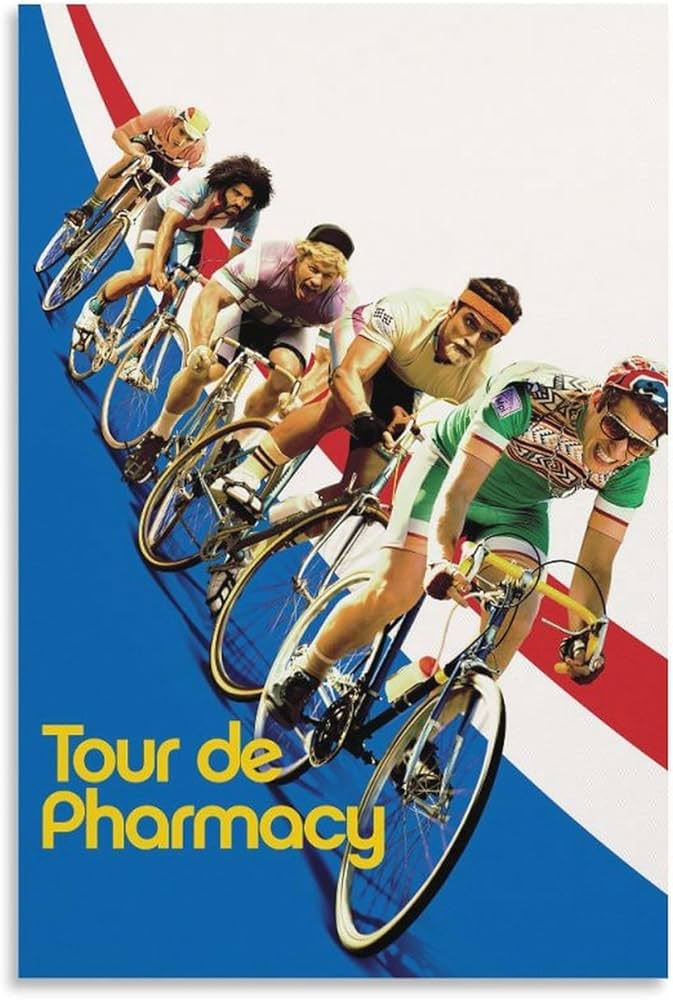
hilarious. a small standalone spoof on 60-minutes-style sports documentaries that goes scorched earth on the idiosyncratic world of professional cycling. as an unironic lover of le tour de france, i adored every moment of this. the writing was good, the performances great, and the movie contained perhaps the most amount of penises i’ve ever seen in forty minutes. a+ all around. this was made even more impressive from a producing perspective, as the cast here is absolutely insane. the 20+ deep laundry list of a-list actors playing bizarre roles was great, but the real hilarity comes with the non-actors they got to play themselves. lance armstrong especially was fantastic.
Oppenheimer
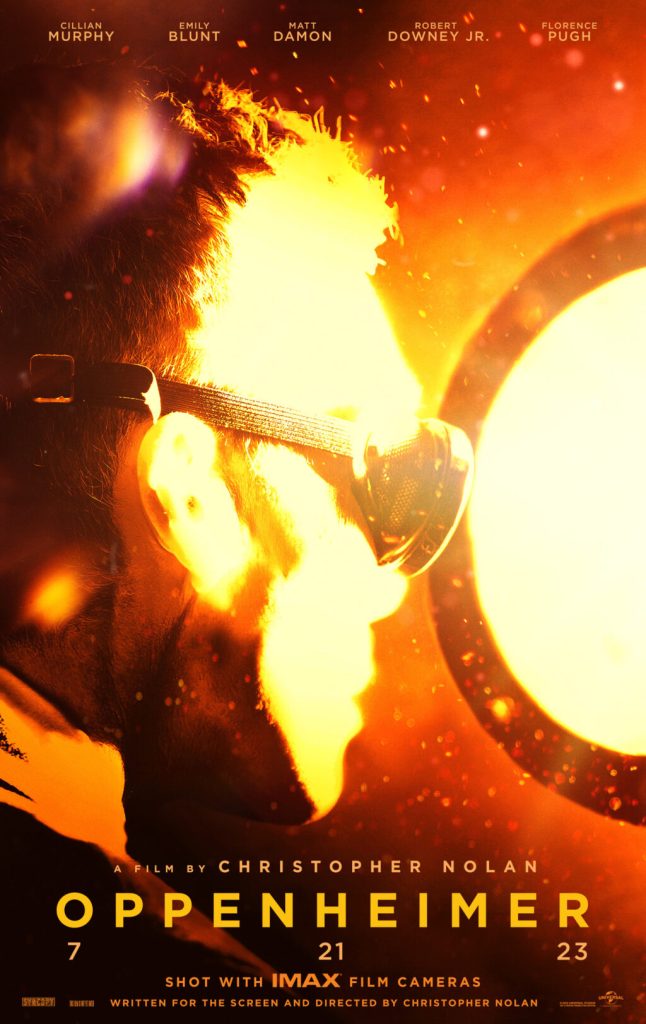
i think this is one of the greatest movies ever made. it’s certainly one of my favorites. i really don’t know what else to say. in fact, this film— undoubtedly filmmaker christopher nolan and partner/producer emma thomas’s best— makes me question my need to talk about movies in the first place. certainly, this movie speaks for itself. the filmmaking is some of the most gorgeous that’s ever been done. from the performances to the set design to the sound design to cinematography to the score and, of course, the writing and direction. i mean, just immaculate. i think that maybe the definitive film of this post-covid neo-modernism. it, like denis villeneuve’s dune movies, transcends a sense of being dated. it eschews temporal specificity not in its narrative, but in its filmmaking dna. it’s non-diagetically fluid. it belongs to any year, any era. oppenheimer’s narrative and set design is hyper-awash in 1930s and 1940s immersion, yet is so crisp and fluid that it could have been made at any moment in time. it’s not a 40s noir, a 70s caper, a 90s action sci-fi tentpole, or a 2010s cgi sensual assault. its ownership feels broader, less defined, perhaps similar to oppenheimer’s opinion of the nature on humanity’s claim to atomic energy itself. i think this a great achievement in filmmaking, made even more so by the film’s surprise popular appeal [in that, i think nolan’s unique, blockbuster prestige plays a heavy hand. it’s kinda like how radiohead makes good music that also happens to be popular]. throughout the film, oppenheimer, enrico fermi, and hans bethe [and even a sidelined, aging einstein] nursed the fear that the trinity test may ignite the atmosphere, destroying the world. in the immediate, the first ever detonation of the atom bomb didn’t wipe out humanity in a single fiery instant, but by the end of the film oppenheimer is resigned to the fact that he and fermi and bethe were probably right. their actions did– and will– lead to the annihilation of all humankind. in kai bird and martin j. sherwin’s american prometheus– the preeminent biography of j. robert oppenheimer on which nolan based the film– they describe oppie’s post-downfall years. after his humiliation at the hands of strauss and the aec, and long after the war before that and his crowning achievement in los alamos, the oppeneheimers permanently moved down to the island of st. john in the u.s. virgin islands where they could drink endless cocktails and host overlong dinners and swim in the turquoise caribbean waters. but, like everything else oppenheimer touched, the apparent tranquility was marred and complicated. oppie and kitty alienated their neighbors, neglected their daughter, and eventually moved back to princeton without their children. oppenheimer died of cancer in the late 1960s, and was again celebrated in the newspapers, albeit mutedly. he never saw perhaps the most tangible result of the domino effect started by his invention: the moon landing. his and kitty’s daughter, toni oppenheimer, committed suicide in 1977 at the age of 32. she hanged herself in her parents ramshackle beach house. prior to her death, she had been denied a government security clearance, one more remnant of her father’s complicated legacy. no one wrote an article about her. again, the question arises: why do i feel the need to say anything after watching these movies? if– among the thousands [millions?] of blog posts, rotten tomatoes scores, youtube videos, roger ebert five-paragraph-essays, and letterboxd ramblings– we are all screaming into the void, then what does it matter if i add my own voice? it seems that perhaps we’re a collective roar amounting to silence. if we’re all yelling, no one is. we’re all just buzzing, waiting to die by the atmospheric ignition of our own creation.
The Conversation
this moody, dark portrait of a surveillance specialist slowly losing his mind is vintage coppola without the glitz of gangsters. instead, we have gene hackman as an aging, aloof introvert who is embroiled in a strange but tense game of cat-and-mouse with a very young harrison ford. this film is very 1970s, with long bouts of nothing that, thanks to a strong script from coppola, end up tying together. a solid twist at the end adds an additional layer, though the best part of the film was the titular conversation that takes place in an extended opening scene [yet another coppola-ism with shades of the godfather pt. i]. unexpectedly, one of the film’s most glorious pieces is the absolutely virtuosic score from david shire. the piano was so lively, engaging, and masterful that it can’t help but elevate what is sometimes bland on screen. interestingly, i really think that the score of ben stiller’s fantastic series severance borrows heavily from shire’s score.
The Right Stuff
there’s such an unbridled sense of optimism in this film that you can’t help but transport yourself back to the 1950s and just pretend– pretend even for an instant– that the coming decades are going to hold up to the great naive promise of american technological superiority. we thought we were going to the moon. to the stars. to space. to conquer once and for all the huge and nefarious divide that nationalism and borders have driven into our world. that’s what the post-wwii trauma was about. for, finally, human psyche had had enough and for one moment it seemed like the bough of death and division would break at last. but, instead, it bent back to its old form. humanity remained atavistically divided into tribes, and the world slid back down the mountain in its sisyphean plight of racism, neo-fascism, and a long, plodding, endless, multi-faced cold war. the only difference between now and then, is that things are a lot more confused, a lot more muddled, and its a sin to be naive. its hard to look back on this film and not feel a bit cynical; a bit jaded. a huge portion of the u.s. military budget was dedicated to non-weapon scientific development, fighter pilots were chasing aeronautical speed records, and lbj was a made a fool on national television by a common housewife. there was a palpable power the lie in the hands of the layperson, and the government was seen as an instrument to further humanity’s progress. the essence of a strong, centralized federal system working for that layperson was never more clear. the term dishonesty was reserved for conmen and priests. the final shot of director philip kaufman’s portrait of an era of intoxicating excitement and optimism is ed harris’s john glenn floating at zero g, in freefall around the earth at low atmosphere, gazing out in wide-eyed wonder at the blue marble below him. the look on harris’s face encapsulates the zeitgeist perfectly: this was it. we only go up from here. which is why looking back on this wonderful film simply makes me a little sad. we were a vector trending upward, but crashed back down to earth before we could achieve escape velocity. and it’s all our fault. the officials we elected, the misguided religious zealotry to which we clinged, the petty squabbles within our own families whose flames we stoked, assured this. interestingly, in the eponymous (and must-read) book by tom wolfe off of which the movie is based, the first line of the first chapter is “the united states lost the space race.” wolfe explains that this is objectively true; the soviets put yuri gagarin in orbit around earth first, as well as multiple satellites and a dog, years before the u.s…. it’s funny thinking now how many conservatives now would take umbrage at this claim. as if our own insecurity-fueled pride were more important than truth. and from there, it’s easy to see how we’ll always be trapped in the quagmire of anti-globalist disunity: we can’t progress and develop as a race if we can’t even face the facts– the laws– of the universe around us. the 1950s and 1960s were eras of such collective hope that a wave of multi-national science fiction writers and artists deigned to date their wildly futuristic creations within only a few decades of the current period. the final lines of ray bradbury’s dystopian far-futuristic there will be soft rains are spoken by the advanced ai of a bombed-out house: “today is august 5, 2026, today is august 5, 2026, today is august 5, 2026,…” hell, even more brazenly– and famously– is stanley kubrick’s masterpiece. 2001: a space odyssey. i’m still in shock that that was seen as a plausible date for trans-solar system space travel, lunar bases, and, perhaps most outlandishly, global unity. i wish. man i fucking wish. instead, in the year 2001, we got what is perhaps the nadir collective human survivalism: 9/11. and the invasion of iraq and afghanistan. seven years later the world economy crashed again, even worse in terms of human-cost and long-term recovery than 1929. eight years after that, donald trump was elected president of the united states. in 2024, $883 billion was spent on bombs and their delivery systems by the u.s. department of defense. that same year, nasa’s budget was cut by 2% to just under $25 billion. that’s an $858 billion discrepancy. the gdp of taiwan, the world’s 22nd richest country, could fit into that. i don’t think we have ever been farther from the stars.
All The President’s Men

a time capsule. not only of a landmark historical event, but of a slower, more methodical style of filmmaking. robert redford an dustin hoffman disappear into their roles as bob woodward and carl bernstein. this film was all at once complex, confusing, thrilling, mysterious, and ultimately masterful. there was a sense of noir here, like the audience was creeping in the shadows, trailing the two reporters as they waded into america’s ugly heart of darkness that was the nixon administration. we see two men as chivalric knights in what might be the most beautiful, romanticized depiction of investigative journalism i’ve ever seen. this was the height of the caper, and its heroes pulled off the big job with only notepad and pen. amazing. i don’t think we’ll ever see a time like this again.
A House of Dynamite

unbelievable. phenomenal. absolutely incredible. filmmaker kathryn bigelow is one of the best directors working today, but this might be her magnum opus. forget the lies, the corruption, the head-scratching farces and the downright fascist villainy; bigelow depicts a u.s. government that is cool and serious and important again. i don’t know that i’ve ever seen something so realistic. the dialogue and the acting (rebecca ferguson is now vying with nicole kidman for my favorite actress while idris elba continues to be, well, idris-fucking-elba) and that score. holy shit. the editing and sound design are even a tier higher, with each scene so immersive that you truly forget you’re watching a film and think you’re dead to rights, sweating bullets the size of sausages in one situation room or the other. the writing is immaculately tight, and the three-act structure, each one woven intricately amongst the others, is simply brilliant. i don’t know how to gush more about this movie. and the ending: pitch. perfect. i want more. give me more.
Man Finds Tape

another really well done found footage film, though unfortunately this one fell flat. it started off super freaky, and, while it couldn’t maintain its high-level of suspense, it ended with some intriguing lovecraftian cosmic-horror elements. the special effects were good, and some of the acting was great [especially the creepy reverend carr]. this movie fell woefully short, however in its writing. the plot was all over the place. extremely messy. the double-antagonists was a confusing choice, and the constant sloppy jump in timelines made for both poor editing and poor storytelling. the worst part of the movie, however, was the monotone voice over that broke in every ten minutes to explain the plot in detail. strangely, it sounded like a vox youtube video explaining the north korea situation.
Tropic Thunder
all-time great comedy. occupies the perfect niche of comedy, action/adventure, vietnam historical drama, and scathing satire of the entertainment industry. at its weakest, the movie is a dumb, mindless explosion-fest, but at it’s strongest it’s an insanely hilarious tour de force of casting and comedic writing. super creative and clearly made with a lot of passion [and money]. maybe the best role of tom cruise’s career.
Wag the Dog
hysterical. absolutely biting satire with dialogue sharp as a whip. dustin hoffman and robert deniro have pitch-perfect chemistry and ooze charisma. hoffman especially is fantastic as the unflappable, credit-hungry hollywood producer. even beyond the knockout punch combo of hoffman and deniro, the talent behind this underrated film is insane. not only was anne heche’s performance as winnifred was the perfect foil to the unhinged hoffman and deniro, but her subtle facial expressions and physical reactions elicited some of the loudest bursts of laughter from me. behind the camera, david mamet’s pen is abundantly evident; the dialogue flowed together so well that at some points it sounded like music. speaking of music, mark knopfler’s gorgeous score for the film was a wonderfully pleasant surprise. this movie and local hero prove just how versatile a musician he really is. i enjoyed myself thoroughly during this one, even when things started to drag a little in the final fifteen minutes. yet another example of man, they sure don’t make em like this anymore.
Coherence
phenomenal. just an absolute masterclass in zero-budget filmmaking. its almost braggadocios how well-written the script is. razor sharp plotting with incredible twists. every few minutes another layer is subtly added that will make you question your own reality. by far, the merit of this film comes from how clever the writing is. writer/director james ward byrkit weaves together a complex, truly mind-bending narrative using practically nothing but glow sticks at his disposal. the acting was incredible, too, with a huge portion of the movie relying on the cast’s shoulders [emily baldoni was particularly impressive in her portrayal of someone slowly realizing, to their horror, what’s actually going on around them]. on top of being one of the best sci-fi/psychological thrillers i’ve ever seen, this movie also portrays one of the most realistic, charmingly idiosyncratic depictions of a middle-aged dinner party i’ve ever seen. man. this is such an inspiring piece of writing. it’s a showpiece of beautiful, clever storytelling for writers everywhere. the only analog i can think of is shane carruth’s equally excellent primer. good company to keep. it’s nice to know brains still trump hollywood bucks.
mother!
jennifer lawrence’s journey through hell with the worst houseguests on the planet is a psychological fever dream so uncomfortable you must give up every sense of viewing control in order to survive it. this film is a nightmare of absurdism; a gorgeous exercise in pulling teeth. the terror and the magnificence live in the stunning sound design, surreal visuals, incredible performances, and invasively dizzying camerawork that feels ready to explode at any moment. filmmaker darren aronofsky truly invented a tenth level of hell. lawrence’s unnamed protagonist is angelic, a gorgeous centerpiece, that degrades throughout the film just like the house around her. just like her reality. a portrait of a home, a body, a mind invaded. violated. a cycle of a seed planted, reaped, and burned. a baby hushed by its mother, and taken by its father. a strange, horrible eulogy for voices loud and strong. an endless shattering of a crystal at the heart of it all; a single tear, weeping infinitely, knowing that one woman wasn’t enough.
Werewolf By Night
one of the most interesting things marvel has done. i loved the crisp black and white, pointedly retro score, and tongue-in-cheek homage to other genres. this felt like a strange mix of 1920s classic universal monsters, 1940s crime noir, and 1980s indiana jones adventure. above all else, however, the strongest part of this movie was its length; coming in at around 50 minutes, this extended short film was excellently paced and kept a high-level of intrigue throughout by immediately dropping the audience into a strange and foreign world [read: a very non-avengers world]. unfortunately, this is still very much a marvel product, and the movie still suffers from cheesy quips, boring action sequences, predictable hero-friendly narrative beats, and cringingly-generic superhero/supervillain movie tropes. overall, a fun watch with unique flashes. want to see more from the marvel bizarr-o-verse.
The Vanishing (Spoorloos)
a strange movie. there were some really strong elements— the acting and the editing chief among them— but the whole film was marred by an achingly dated style. the score was a weird blend of cheesy synths and stringy, wiry guitars. the narrative was slow, boring, and lacking in tension. if this movie came out today, i believe there’d be a much greater emphasis on keeping information from the audience so as to shape out a really intriguing mystery, but this narrative had no interest in doing so. instead, we saw the story of a missing woman from equal parts the side of her grief-stricken lover and her sociopathic abductor. the majority of the story unfolds in flashbacks during expository conversations, which go from mildly interesting to downright plodding. the highlight of the narrative by far was the ending reveal. overall: nonplussed. interesting to hear the mix of french and dutch dialogue [especially the old-school broadcast of the 1984 tour de france], but that’s about it. i feel no need to watch again.
Incendies
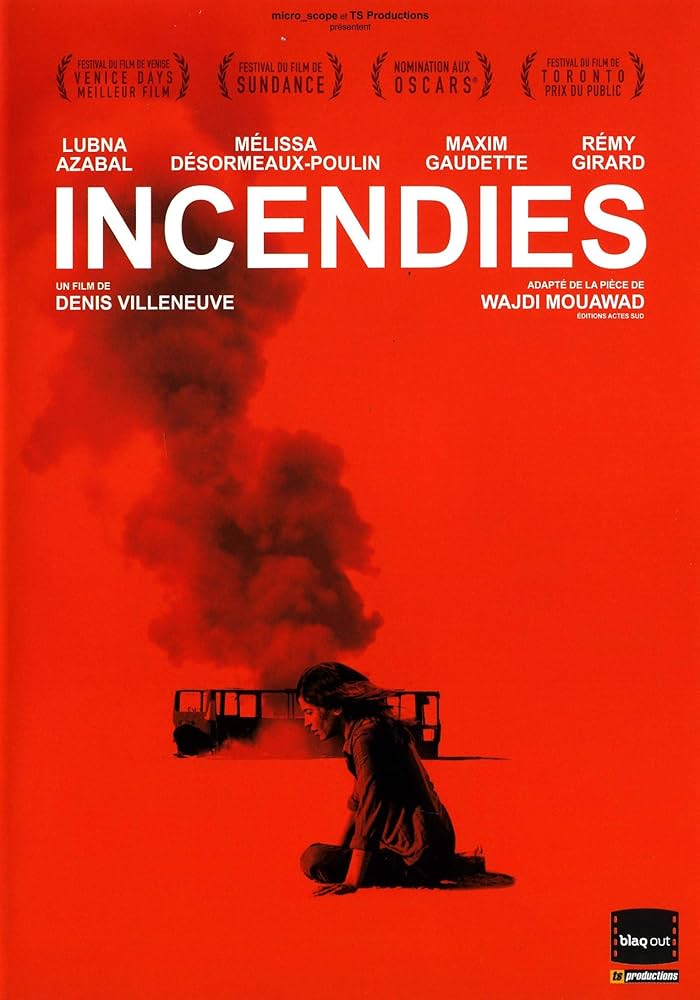
striking, beautiful, fucking devastating. the most powerful movie i’ve ever seen. truly, truly horrifying. another non-english language film that was nothing short of stunning. maybe the best anti-war film i’ve ever seen, as well. two searing additions of radiohead deep cuts [both, incidentally, from the criminally-underrated and then-contemporary amnesiac] add a sardonic, otherworldly commentary to the film. you can’t but help tap your fingers along to the music. your body moves to the infectious beat. your mind hums along to the brilliant thom yorke melodies. but your eyes; your eyes are still taking in the stark, muddy dilapidation of the human condition. and before you realize it, the song stops, and your mind crashes back down to earth. and a bus is on fire. and people are screaming. and you realize there is no escape. the editing was masterful and terrifyingly smooth, the camera work immersive to the point of discomfort, and the acting was gut-wrenchingly perfect. but it was the writing that sets this film above almost any other. every line of dialogue drips with agony and resignation and silent, stoic resilience. every scene builds to the horrifying inevitable. the twist at the end…. catastrophic. there is no world in which war is ok, yet the reality of our world is that it is war. it’s all war. does that mean our world is not ok? is it terminal? does it need to be killed? it’s death and torture and rape. yet the fact that humans still have the capacity to love, let alone shining love that streams through the cracks in the wall of entropy and rot and self-serving villainy like magnificent beams of light, is mind-boggling. and its beautiful. gorgeous. i’m so happy that it’s there. i think this is filmmaker denis villeneueve’s best [which is saying something given his immaculate filmography]. this is a film that needs to be seen. my hope is that every person who sits down to watch this film, that forces themselves to endure this shared pain, to stare wide-eyed at the horror, will find themselves a different person by the credits. the only thing we’re looking at when we see this movie is a mirror. the human condition is reflected back at us in its brutal, disgusting, brilliantly hopeful entirety. babies crying, women raped, children killed. torturers forgiven. it’s uncomfortable, but it needs to be experienced so that we can be a little less naive, a little less ignorant. a little more loving. a little less scared.
Drive My Car
stunning. absolutely stunning. maybe the best-paced film i’ve ever seen. the three hours flew by. every scene fit perfectly in with the next, and every plot point alluded or foreshadowed another in beautiful, succinct fashion. every frame was indeed a painting, and the acting complimented the filmmaking in a serene, sensitive way. there was a real poetic flow here, punctuated by the surprising and, quite frankly, jaw dropping, inclusion of the opening credits at a particularly unexpected spot. The relationship between yusuke and misaki was gorgeous, heartwarming, and truly touching. i think the film courageous in its approach to sex and romance; it seemed to place familial love and simple companionship above a sexier, more hollywood style of love. in this sense, the film was thematically simple, yet it is only a testament to how smoothly interwoven its complexities are that it appears so. i can’t remember the last time i saw something so beautiful. i will not forget this one. one of my favorite movies of all time.
A Real Pain
a magical film. small, soft, and dripping with, well, real pain. it’s a beautiful meditation on depression, loneliness, and grief, told through a warm lens and a gentle voice. kieran culken is at his most subtle; you can feel the torment roiling beneath his ultra-friendly, slightly-unhinged facade. The writing is wonderful and seeks not to waste your time, rather simply present you with a glimpse into a real trip, to a real time and place, and dripping with real pain. The brilliance lies within the very first shot and the very last. they’re almost identical. culken’s benji, sitting alone at an airport, with nowhere to go and no one to talk to. he’s at his loneliest, his most pensive, but yet it also seems like it’s where he’s most comfortable, despite his otherwise bubbly and seemingly extroverted personality. he rejects his cousin’s invitation to dinner, perhaps because he knows he would be a burden. and even if dave insisted otherwise, to those in pain, we are always a burden, most of all to ourselves. this movie is quiet, and says more with its chopin-laden score than many other meditations on grief could. perhaps that reminder is necessary: sometimes the happiest people are hiding the most pain.
Blue Moon
what a movie. gorgeous; full of sadness, beauty, and endless style. there’s a sense of deep intimacy that feels like you’re in the bar with ethan hawke’s lorenz hart. you’re transported; he’s gripping your lapel, he’s waving a sour, chewed-on cigar in the hazy air, he’s spitting in your face while waxing poetic with whiskey on his breath and a poem in his heart. an on-screen musician plays a sensual piano plays live throughout the film, which is woven into the narrative, scoring [almost] every line of hart’s dialogue in clever, intentional ways. this felt more like a play, or perhaps a stage-musical with a meandering melody, than a movie. hawke delivered what’s likely his best performance ever, and margaret qualley was absolutely stunning. i could watch their interplay forever, and laugh and cry and cringe every time. bobby cannavale was surprisingly fantastic too, offering a nice dash of charisma and humor [i think without it the movie would have been a tad stuffy], while andrew scott’s richard rodgers was the counterbalance necessary to spotlight his once-partner’s lunacy, passion, and, ultimately, heartbreak. it seems like the filmmaker, richard linklater, doesn’t make a bad movie [i’m looking at you school of rock and apollo ten and a half], and this film fits the trend, while also giving us a window into a microcosm of 1940s new york city. hawke’s performance spoke to me more than any other performance I’ve seen lately, and it’s no mystery why. i too feel like a fool. like i’m endlessly chasing a train down the tracks that is endlessly rumbling away. like all i do is drink and hate and self-sabotage and deflate until i’m nothing. i think that he was perhaps speaking for all of us when he said “no one has ever loved me that much.”
Possessor
*sigh* i was excited about this one, but it disappointed me. right off the top though: sean bean [almost] continues his legacy of spectacular on-screen deaths, and the practical effects are incredible. other than these two things, this was a muddled, meandering narrative that moved at a plodding pace and failed to deliver what its first act promised. a caveat: i watched the ‘uncut’ version, so it’s possible the re-added cut scenes contributed to the the film’s poor pacing. i could believe that this is the case, especially since the film’s fistful of shining scenes do indeed shine with a lunatic brightness. with that said, the issues are much broader than just poor pacing. the filmmaker, brandon cronenberg, presents amazing, visceral, and often deeply disturbing visuals, though the rest of the film stumbles through genres, hinting a rushed development process that fails to make use of the obvious on-screen talent. the concept began as intriguing, though quickly fizzled into a kind of gray nothingness, rife with bland characters, jumbled themes, and a near non-sensical story. It’s a shame because the technical filmmaking is more than impressive— the editing, the lighting, and the aforementioned stunning [and awe-somely revolting] practical effects are all jaw-dropping— but the writing is almost comatose. the drowsy nature of the movie makes the abrupt moments of hyper-violence and stomach-churning gore seem out of place, unearned, and gimmicky. unfortunately, great performances and flashy effects couldn’t save this story.
Mystic River
abused people abuse people. violated people violate people. ignored people ignore people, first others then, ultimately, themselves. and then they’re invisible. and when they’re invisible, they’re dead. or might as well be. it’s hard to wash the slime out once it’s inside you. but about the film: moody, thrilling, and romantic in the purest literary sense. the natural world, rainstorms and all, bends itself around the searing emotions of the characters, a la victor frankenstein shambling and screaming in the rain. this is a narrative about pain, deeply layered pain. the movie is filled to brimming with monologues that teeter on the edge of cheesiness, but are continually reigned in by good writing and great performances– kevin bacon and sean penn delivered career-performances, but it was tim robinson’s magnetically haunting portrayal of a long-suffering victim of child-abuse that stole the screen. i’m not usually a fan of clint eastwood as a director [as an actor, well, that’s a different story], and his characteristic lack of grace shows, especially in the film’s conclusion. the handling of some of the heavier themes is a bit clunky, and i found myself dissatisfied with the characters’ resolution [specifically, dave’s, celeste’s, and, especially, jimmy’s]. oh well, as the old-heads say, they don’t make em like this anymore; big, heavy, and utterly expensive. a nice time capsule. dave says: “sometimes the man wasn’t a man at all. he was the boy, the boy that escaped from wolves. an animal of the dusk, invisible, silent, living in a world the others never saw. a world of fireflies, unseen except for a glare in the corner of your eye, vanished by the time you turn your head toward it. just gotta get my head right, catch a nice long sleep. and the boy will go back to his forest. back to his fireflies.”
Uncut Gems
overrated. adam sandler sucks. horrible people doing cringey things. triggering in almost every way. it’s funny, I had a feeling about this movie when it first came out years ago. i put off watching it, and was not disappointed in my disappointment. the filmmaking was obviously competent, masterful even, but, man, was this a horrible story with horrible characters. fuck you. never watch again. reflecting on my initial reaction [this sentence starting a few says after the previous], i’m considering whether or not it was the intention of the filmmakers, benny and josh safdie, to elicit these strong feelings. if so, bravo. if not, bravo still. for the unintentional eliciting of strong feelings is perhaps yet a more admirable strength of art. what i can’t seem to get out of my head is the image of various youtube “art”-boys wearing uncut gems sweatshirts back when this movie first came out. they never addressed their wardrobe, though they might as well have been holding up a neon sign that read “look at me. i’m sensitive and i watch films. i’m smart. praise me.” i can’t tell you how much this pissed me off– and still does to this day. it has the essence of getting away with it. meaning, they’re operating in a toxic capitalist echo chamber that is reverberating their own bullshit back to them shrouded in celebratory accolades and ‘atta boys. no sense of their own privilege, no sense of pain or authentic emotion. just performance. and uncut gems was the tool of that performance. is this the fault of the safdie brothers? certainly not. is this the fault of the film as a whole. probably not, as well. i do lay some blame, however, at the feet of the studio. a24. they’ve made great movies, but, more importantly, they’ve made a lot of movies. that crucial aspect goes against the myth that they’ve created around themselves: that they are the last great indie film company. this reeks of bullshit. it’s a lie. and unfortunately it’s one that sensitive berkeley boys and clean-cut harvard bros and cutting-edge silverlake hipsters and scrappy talent agent assistants have bought into wholesale. i think i see my own shame reflected in all of this. my own trauma and mental issues [of which there are many]. in a way, i’m grateful. because those issues caused me to avoid falling for that lie. that big fuck you, give us your money while we pretend to be righteous lie. but there are millions of young, brilliant, creative, endlessly cool people out there that fell for the lie. that makes me sad. that makes me angry. that makes me want to hurt myself because the enormity of the bullshit is such that i am well aware i can’t change it. i can only sit here and stew and rage against uncut gems– a movie, mind you, that did nothing wrong. i hate this movie because, to me, it represents a huge piece of my own personal shame: they’re getting away with it, and there’s nothing that i can do about it. fuck.
Masking Threshold
really good, though my least favorite of johannes grenzfurthner’s loose trilogy. incidentally, it’s the first movie of his, and the one he claims to be “least accessible.” immaculately shot, written, and acted. the close-up shots were truly unsettling, if not outright revolting in a kind of strange, guttural way. there was a sense of being almost…embarrassed… to watch this film. like i was peeking in on a man’s private activities. you know, the ones he gets up to when he knows no one is home. or, better yet, when he knows no one is coming home. yet the man didn’t mind if i peeked, in fact he wanted me to peek. and his actions were for me. because i was peeking. i found myself growing more and more paranoid as i watched, yet couldn’t shake off a sense of drowsiness, as if i was being lulled to sleep. interestingly, i developed a strange, yet intense, kinship with the protagonist [played by, but not voiced by, grenzfurthner himself]. i understood his obsessive introvertedness and my mouth drooled when he took extreme measures to isolate himself from the outside world. i even sympathized when he killed his neighbor, then the amazon delivery guy, then his mother. i was rooting for this guy, and hated– though understood, yes, always, understanding– when he eventually shot himself in the head. oh well. like his two other films, grenzfurthner slides before our eyes an interesting and slowly-developing grotesque study in loneliness and what it means to descend into madness. is there someone peeking now?
Razzennest

yet another incredible, totally bizarre, and absolutely unique movie experience from writer/director/editor johannes grenzfurthner. part 2 of grenzfurthner’s loose trilogy. funny, horrifying, unsettling, beautiful, and unabashedly original. razzennest [said with a hearty geramanic-austrian accent] is all at once a biting satire and searing commentary on religion, history, war, politics, and– somehow– dvd director’s commentaries. this was truly like nothing i have ever seen before. did not like as much as solvent.
Solvent
wow. wow. amazing. hands down one of the most disturbing things i’ve ever seen in my life. i absolutely loved it. so strange, unsettling, and ultimately disgusting on many different levels. the editing was phenomenal. the score was great. the cinematography was great too. the acting was fantastic, especially from the actress that played krystyna. my only qualm is that some of the voice-over dialogue was cheesy. sometimes sounded like a video game character. regardless, this was an incredible viewing experience. truly original. i believe that’s what i value most at this stage of my life. this filmmaker, an austrian artist named johannes grenzfurthner, intrigues me. i’m excited to investigate more of his filmmography. interestingly, grentzfurthner claims that his films make somewhat of a loose trilogy, with this being the 3rd installment. good place to start, i suppose.
Host
it was fine. another one where the film itself excelled technically, but the narrative was nothing special. it nailed the covid lockdown, zoom-only format. probably the best there is in that regard [even the end credits were shot manually, using zoom participant names]. the acting carried the film– all five main women were phenomenal. host also boasts some seriously impressive practical effects, out of what i can only imagine were jury-rigged pully systems. cool indeed. don’t know that i would ever watch it again, but if i was to make my own zero-budget film at home, this would be the gold standard example to study.
Milk & Serial
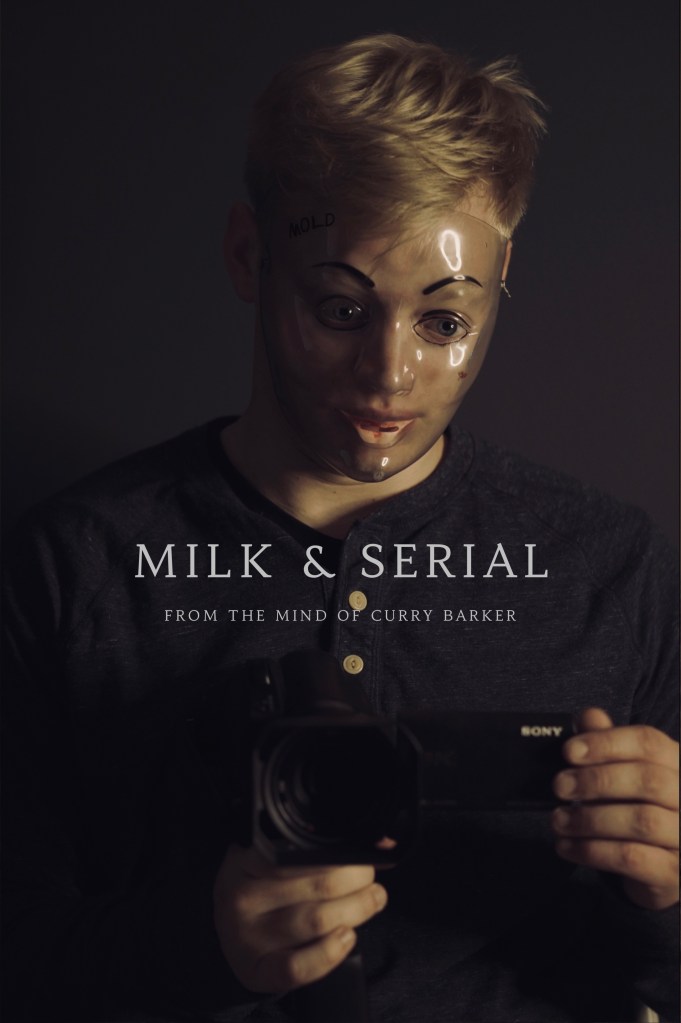
pretty good. more impressive from a technical standpoint than a narrative one, but I enjoyed nonetheless. points for releasing on youtube for free. unfortunately, i was most terrified and unsettled in the first five minutes when i had the least amount of information. by the ten minute mark, however, i feel like the filmmaker [and youtube creator], curry barker, revealed too much too early, and the film quickly turned from horror into a kind of procedural [albeit with a grisly bent]. excited to see what curry barker does in the future, he is clearly very talented. i see a similarity between him and danny & michael philippou.
Butterfly Kisses
wow. unbelievably good. so original. this is 2…maybe even 3 movies in 1. butterfly kisses is a horror mockumentary, wrapped in a critique on filmmaking, wrapped in a true-crime satire, wrapped in a found-footage thriller. i can’t believe more people aren’t talking about this. i need more films like this.
Mister America
forget the comedy, forget even entertainment. when i think of tim heidecker/gregg turkington mainstream, feature-length ventures, this is it. this is my favorite. the la times hated it, but i love it. super funny, super weird, super niche, and brimming over with inside jokes that only watching dozens of hours of on cinema could clue you in on– this is truly a project for the fans. and it watches like one too, with fast pacing and killer performances. its no philosophical masterpiece like entertainment, but its much more intimate. it acknowledges the viewer for the entirety of the runtime; it’s tim talking to us in a way that’s more personal– more candid, even– than he has before. But what cements this film as head-and-shoulders above anything tim and gregg have ever done [with the only exception being the trial of tim heidecker, and perhaps on cinema, at the cinema in its entirety], is how surprisingly– shockingly– emotional it is. the entire film is worth watching for the final ninety seconds. a rare, dare I say, the only, moment of emotional vulnerability and introspection from tim in the history of the character [this is only rivaled by tim’s breakdown at the end of on cinema season 12, yet even that pales in comparison in terms of build-up, tension release, and thematic weight]. and the final shot: perfection. a wilted, trampled yellow flower defiantly growing amongst a vacant dirt lot with the desert sun setting behind it. nevermind the lot happens to be the site of tim’s accidental mass-murder. my third time watching.
Strange Harvest
definitely the best “true crime” anything I’ve ever seen…which is saying something since it was a mockumentary [read: fuck exploitative true crime bullshit]. some of the acting and dialogue was super cheesy, but overall well-made and genuinely terrifying. excited to see what else this filmmaker does.
The Last Duel
another very good film from ridley scott, one where he returns to [what seems like] an intense commitment to authenticity, and one, also like the duellists, that is based on a true story. i wasn’t sure what to make of it in the first chapter, but then, once the structure was revealed to me, i was completely sold. the performances are all fantastic [as would be expected with such a star-studded cast], with jodie comer’s being the lynchpin that holds everything together. i fear, though, that without this unique structure of three competing sides to a story [ingeniously told from three characters’ perspectives– two of the three being unreliable], the narrative’s legs would not be strong enough to stand on. the structure makes it interesting and a tad unique, but, beyond that, there is little more that this film does that has not been done before.
The Duellists

phenomenal. pastoral and flowing, grandiose and breathtaking, this is one of the most visually striking movies i’ve ever seen in my life. i will never forget that final scene among the fortress ruins. and i will never forget that final shot overlooking the river. incomprehensible at times, unapologetically dense, and utterly realistic. i can’t speak on the authenticity, as i am not as knowledgeable of 19th century france as well as i am other historical periods, but this movie exudes verbose realism. there was this humming sense of intense layered authenticity. ridley scott’s first film. this boded well for things to come.
The Others

wow, amazing movie. maybe my favorite haunted house movie I’ve ever seen, thanks to a clever premise and even better twist. nicole kidman shines once again [she is quickly becoming my favorite actress. move over lea seydoux]. the sense of space and time was incredible. haunting, terrifying, ominous, and historically rich. it’s an extremely cozy movie that feels centered emotionally and balanced by two surprisingly great performances from the young children. i long to return to this world with a fresh pair of eyes and take in kidman’s ethereal beauty for the first time again. this is an underrated film for both horror-fans and cinephiles alike.
Three Billboards outside Ebbing, Missouri

great story, and amazingly acted by frances mcdormand, woody harrelson, and, especially, sam rockwell [i’m realizing that sam rockwell is one of my favorite actors], but, surprisingly, a few of the other actors, especially the son, gave pretty poor performances. the editing was a bit weak, with some strange cuts that left me wondering what the hell happened. it had some great moments, but the open-ended conclusion [or lack thereof] left me very dissatisfied. overall, one of martin mcdonagh’s weaker films. with that said, there were some mcdonagh signature touches on the movie– specifically woody harrelson’s character. that entire arc was enjoyable to watch and served as an incredible catalyst to kick the rest of the narrative into high gear. that type of screw-tight plotting and narrative pacing is what i expect from mcdonagh, and what i found lacking a bit in other parts of the film. especially when compared to the banshees of inisherin, which i believe to be more in mcdonagh’s wheelhouse of european surrealism/subtle fantasy [see in bruges as an early marker of this]. three billboards perhaps got lost in the hyper-southern, hyper-american mise-en-scene, which yielded a slightly inferior product than mcdonagh’s other projects. interestingly, this was mcdonagh’s buzziest movie when oscar season rolled around. yuck. a shame? i think not. still successful, highly enjoyable, and utterly unique.
Pi
strange, surreal. fantastic score, sound design, editing, and cinematography. the story was simply ok, though it went quick, thanks to excellent pacing. max and saul were acted superbly, though everyone else felt cheesy. unfortunately, this is an example of the initial premise outpacing the narrative. in fact, some of the poster art is cooler than the actual film. it was clear aronofsky made this for dirt cheap and [likely] not legally, and is an admirable art-school debut.
Platoon
another oliver stone masterstroke. this is a classic of the vietnam-movie genre, and it flexes its muscles. the setting is gritty and expansive, the music utilizes emotionally gripping touchstones of classical compostition [notably barber’s adagio for strings as the motif], and the performances are amazing. i am not sure if willem dafoe has ever been better. the film touches on so many hot-button issues of the war that one might think stone sat down with ken burns and lynn novick to write it. drug use, fragging, racism, booby traps, great music, young-and-inexperienced 2nd lieutenants leading disillusioned platoons, the disgusting and filthy horror of geurilla warfare. it’s essentially a vietnam best-hits showcase that does its job and tells a good story, but little more. apocalypse now this is not. i wouldn’t exactly call it anti-war either, which is a dangerous line to toe. if you want something more, seek out francis ford coppola.
JFK
yeah, wow. i know there’s a lot of baggage attached to this one, but i don’t care. the discourse and controversy surrounding this movie is irrelevant because one thing, and one thing alone, stuck me: it was incredible. rarely has 3+ hours of a movie felt so enjoyable. costner is incredible, and the story simply flies along. a masterful feat of filmmaking. oliver stone was practically showing off at points– the writing, directing, cinematography, and, especially, the editing were all in sync and running on all cylinders. this is one i will return to again and again. almost makes me wish there was more to that day on novermeber 22, 1963.
Thirteen Days
really great, such a treat to see such a masterful depiction of october 1962. The acting was amazing, especially bruce greenwood as jfk and steven culp as bobby kennedy. [aside: bruce greenwood was also great in an underrated stephen king adaptation, gerald’s game.] the pacing was great, and i was riveted the whole time, though some of the plot points were hard to follow. i want to know even more about the cuban missile crisis. probably the greatest depiction of jfk in any movie. really liked greenwood’s realistic portrayal of the man. there was no hero-worship here. he does a great job fleshing out the real-life character arc that saw jfk step into his own as a president over the course of those thirteen days. already want to watch again.
The Banshees of Inisherin
one of the oddest movies I’ve ever seen. absolutely loved it. such a beautiful meditation on depression, loneliness, and war. these are themes that are close to my heart. beautifully shot, amazingly acted, and very funny too. but the wrtiting. the writing. i love martin mcdonagh as a creative, specifically because he’s primarily a playwright, and it shows. the plot is just so tight, with all the pieces fitting together in such clever, introspective ways. but throughout the film, similar to mcdonagh’s previous effort, in bruges, a sense of stage-like surrealism drips off the script. as if to say: this is not how life is, but how we make sense of it. this is not our reality, but it could be. a new favorite. in some strange way, this film feels like mine, mine and only mine. there’s an intimacy there that goes beyond words– beyond even what i consumed while watching. i feel as if the energy of the narrative echoed off the screen and into my heart. not unlike the echoing of gunshots and bomb blasts from the mainland to the island in the film. i will be returning to this.
The Comedy
new york has never been uglier. the tim heidecker version of entertainment was disjointed, uncomfortable, and aimless. i’m left wondering if heidecker and company were aiming for a hyper-specific niche [not unlike their later venture with entertainment], but missed the mark. because they were aiming high, the gravity of the film’s failure is all the more palpable. a shame. whereas entertainment would go on to hit the philosophical mark, the comedy too strove for it, but landed more in the realm of pretentious. while this film doesn’t work on its own, it does work as a precursorial sketch. for that, it holds interest, if for nothing more. i was glad when it was over
Entertainment

bizarre, unsettling, chunky, gross, rough, surreal, gut-wrenching, amazing, beautiful, confusing, embarrassing, masterful. gregg turkingington, the maestro of movies, the viscount of vhs, shines in what is probably his best acting performance ever. the line between him and neil hamburger becomes more blurred than ever, which mirrors the viewers experience watching this film. at a certain point, the discomfort is so great that one feels their heart pounding, their head swimming, their balls aching, and their cloth underwear stuck to their sweaty thighs as if they, too, were laboriously trudging through the shattered, pathetic american dream, or, in the movie’s parlance, the mojave desert.
Gladiator
aka the c plot from the way of kings. a feat of filmmaking for sure, and epic in scope, though it was overlong and i can’t help but feel like the script was something that brandon sanderson could’ve written in his sleep. the score was amazing and the acting was, of course, great, but the cgi and clunky green-screen brought it down. overall, a good movie, and i can see why it is considered one of the greats, but it was dated and even downright cheesy in a few places.
BlackBerry

another one that was surprisingly great. acting was phenomenal, especially glenn howerton. felt like a really fun mix of the social network and the big short. highlight for me was howerton’s character’s obsession with the nhl and his hilarious ploy to try and steal the pittsburgh penguins. EDIT ONE YEAR LATER: wow. i can’t believe my naiveté here. a year later and i’m coming back to this after watching all of nirvanna the band the show [both the web series and the viceland-distributed tv show], and posting my thoughts on operation avalanche. my “suprisingly great” line at the top of this entry is especially pathetic. matt johnson is a surrealist master, a fact to which i was woefully blind at the time of the time. ignorance can be bliss, sure, but it can also be embarrassing. ha. oh well.
Frost/Nixon

incredible acting, great cast. matthew macfadyen was a surprise highlight for me. ron howard is a master; i don’t think he’s ever done something that i don’t like. the pacing especially was great. the movie flew by and just felt altogether smooth. it watches more like a thriller more than anything. really cool seeing this super nuanced look at a historical event I really did not know much about. to my pleasant surprise, this is one i would revisit in an instant, over and over again.
12 Years A Slave
amazing. extremely well made. powerful, raw, and essential. i’m disapointed in myself for not having seen this sooner, but i’m glad i finally watched it in a focused and critical manner. interestingly, more than anything, the sound design was the most impressive aspect of the film. every sound was piercing and reinforced the stellar writing and direction. absolutely star-studded cast with an amazing performance from michael fassbender.
Korengal
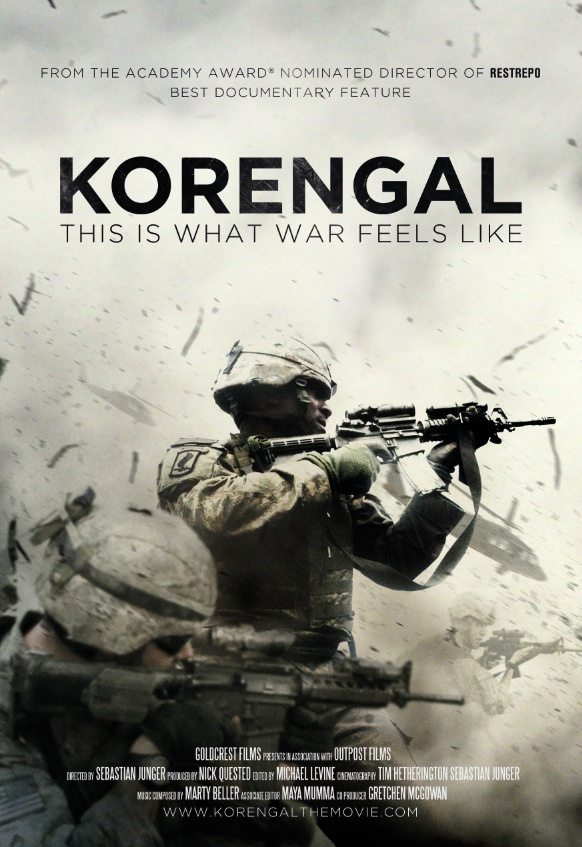
essentially restrepo #1.5. much less structured and more raw— it was essentially bonus footage from the first documentary told through extra italy interview footage from the same platoon members. still incredible and felt more personal. less focus on firefights– and, crucially, not narratively centered around the push to op restrepo and operation rock avalanche– and more on the dogma of living and serving with a combat team in a warzone. loved it. i’m wondering if this was filmmaker sebastian junger’s attempt to somehow reconnect with his longtime creative partner and friend, tim hetherington, who was killed in libya between the release of restrepo and this film. korengal feels more intimate and…searching…than restrepo, which had a more man-adventure tone to it. this documentary felt unnecessary, yet, perhaps because of hetherington’s shocking death, welcome.
The Killing of a Sacred Deer

totally bizarre. totally unsettling. really loved it. great sound design and score. acting was amazing. nicole kidman was especially great. barry keoghan was at his most unsettling, and i’m not sure the movie would have worked without him. perhaps my favorite yorgos lanthimos…?
It Comes At Night

deeply unsettling all the way through. fantastic score. amazing second half, though first was a bit unfocused. the whole thing felt like a post-apocalyptic novella that tried to be stretched out to a horror movie. despite the shortcomings in terms of the narratives breadth, however, this is one of the more subtly well-realized movie worlds I have ever seen. the writing is excellent; sharp and tightly-tuned. the script is clever, making use of every angle of the two familes’ uneasy dynamic [including, especially, the dog] to create a rich and layered sense of mystery. the film also, to its credit, never lets up. from the first frame there’s an indelible sense of mounting horror, punctuated, i believe, by the multiple threads of interwoven tension [the strange sexual tension standing out to me even upon re-visit] and shifting aspect ratios. i keep returning to the word unsettled. the filmmakers did so much with so little. i’d like to see more.
Saint Maud
absolutely loved it. unsure what else to say. this is a perfect movie; it’s unsettling, even psychologically revolting, as it is small and meditative. there’s a loneliness to the film that creeps along throughout, often teetering on the edge of safety and psychosis. there’s an obsession that pulses in the background, bursting at the seams of both the character’s mind and the movie itself’s meta-data. the film’s merits rest squarely on the shoulders of morfydd clark, who delivers one of the best performances i have ever seen. this isn’t a film for the fainthearted, though it is a film that i think everyone needs to see. just like everyone needs to feel depression to understand loneliness, or feel rusty needles in the soles of your shoe to understand pain.
Weapons
thought it was good, but certainly overrated. this is a film not made for film lovers, but for less-discerning moviegoers and horror fans. while the filmmaking was excellent, the writing was a bit clunky and there were huge thematic issues that went unaddressed. child abuse was an ugly undertone throughout the film. two scenes that spring to mind are: 1) the teacher insisting on giving one of her students a ride home, only for the young student to get more and more uncomfortable and 2) the little boy being forced to buy groceries then walk home with them for his family. these were in-your-face, sound-the-alarm depictions of child abuse [that the writer/director certainly lingered on], yet they went unaddressed. i found myself perplexed and dissatisfied when the film ended abruptly with a jokey-action sequence. this failure to stick the landing reminded me of how the filmmaker, zach cregger, botched the ending [thematically-speaking] of barbarian, too. disappointing and more than a bit triggering. insulting even. i’m excited to see what cregger does next, though i’m wary. i wonder if the production company, roy lee’s vertigo entertainment, has something to do with both this film and barbarian just missing the mark. it wouldn’t surprise me.
Combat Obscura
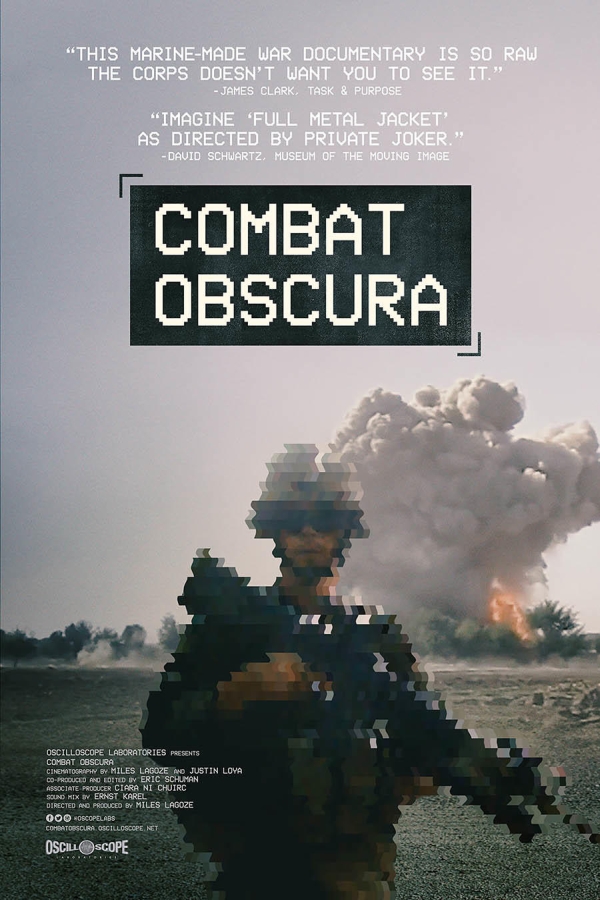
amazing. touched on some parts of war that were too “small” to make it into sebastian junger and tim hetherington’s seminal restrepo, and for the most part this really works. combat obscura is much more cinema verité than restrepo, and the filmmaker, miles lagoze [who was actually enlisted as a combat journalist in the marine corps at the time of filming], is not concerned with telling a narrative. rather, this film is a series of small moments that paint a loose picture of what war was like for a handful of men. with that said, the smallness of those moments doesn’t mean they don’t suggest [or outright depict] enormous and, often, dire consequences dripping with injustice and US-funded horror behind them. at times, watching this film feels like we’re getting away with something, like we’re watching something we know we shouldn’t. it’s a confiding feeling, almost intimate. and intimacy is where this film shines, even if it’s uncomfortable, accusatory, and violent as a poised knife lurking in the shadows.
Friendship

tim robinson was hilarious [as expected] but the rest of the movie was bit of a disappointment. the plot was meandering and incoherent at times. overhyped. favorite scene was the conner o’malley-tim robinson exchange in the basement. left me wanting more from that duo. unfortunately could not say the same about paul rudd’s character, not to mention the odd dynamic between tim robinson and his family. wanted to love this, but couldn’t.
Singin’ in the Rain

third time watching and still holds up! greatest musical of all time without a doubt. the cinematography, direction, editing, writing, music, humor, and [especially] the performances shine, but its the sets and coloring that make this film phenomenal. unlike anything i have ever seen before. totally unique and endearing; i already want to watch it again.
Contact

very good, though feels bogged down by studio interference, a choppy scripts, and spreading itself across two many themes. at the heart of this is an amazing first-contact story centering on a great protagonist played brilliantly by jodie foster. but the extraneous elements of the film not only bog it down, but dismantle it from a smooth film experience to a disjointed series of episodes leading from the south american rain forest to the white house to the far reaches of the universe. matthew mcconaughey also takes a really interesting character and mangles him into one of his most annoying roles. the writing there didn’t help either. it’s a shame, because this story feels like it has so much potential, but it loses the plot quickly. i’m left wondering how tight carl sagan’s original book was, and how much bullshit the movie added. perhaps it’s worth a read to find out.
Close Encounters of the Third Kind

blew my mind. 100%. a spielberg film that I’ve never heard much about [i believe because it was overshadowed by its more famous contemporaries in jaws, indiana jones, et, etc.], but it became a bug in my mind that I just had to get out. it was truly amazing. the effects were maybe the best i’ve ever seen, second only to kubrick’s 2001. the story was amazing and the characters were emotionally grounded, yet there was this surreal sense of adventure that blossomed from small-town hijinx to otherworldly grandeur that sunk its claws into me. the alien abduction scene in the house also proved to be one of the most unsettling things I’ve ever seen on film— which came as a complete surprise because i don’t consider aliens scary. really amazing, with grounded sci-fi elements that felt real and beautiful emotional beats that connected me with a sense of humanness throughout the film.
The Third Man
this was the next orson welles stone i hopped to after watching citizen kane….and charles foster kane it was not. the highs were high in this one— very high, perhaps higher and dripping with more intrigue than citizen kane or sunset boulevard. but the lows were low and the love story bogged this film down. still, it was immaculately shot and the sense of being in vienna was so palpable that I felt transported there. this is a story world in which i found myself wanting to live longer, walking the shadowed post-war austrian streets with a flipped up collar and a sharp-rimmed fedora pulled low. writing about this puts a new bug in my mind. next up: the maltese falcon. after that, perhaps another visit to that white house in morocco…
Citizen Kane
it’s amazing. hands down. i can see why it’s been called the greatest film of all time, but perhaps most influential is more apt a title. its energy, pacing, action, cinematography, editing, and writing all push the bounds of what feels possible, even now, so i can’t imagine what its impact crater looked like in 1941.
Schindler’s List
i think i can confidently say this is my favorite film of all time. this is my third time watching it and every time it comes back as something more dense, thought-provoking, and truly emotionally-stirring. the black and white photography is maybe the best I’ve ever seen. the score is layered and resounding. the direction and commitment to realism is like nothing else I have ever seen or ever even heard of. the shower scene…. it’s been called the scariest scene ever put on film, and I think, for once, cinema writers and film critics got that right. neeson has never been better. fiennes has never been better. and spielberg has never been better at capturing emotion, beauty, and deep horror. this is a film that is transfixing. utterly hypnotic.
Creep 2

didn’t like as much as creep 1, but still thought it was great. a lot of folks say this one is better, but i don’t think so. interestingly, i think it’s horror nerds that say that, and i guess i can see why, from a genre sense [in that it defies the trappings of a genre-sequel in a really interesting way]. but yet i felt as a film it didn’t capture the same magic as its predecessor.
Creep

another zero-budget horror that blew my socks off. so, so original and brilliantly done. mark duplass became a favorite after this. loved.
The Blair Witch Project
instantly became one of my all-time favorites. absolutely incredible. the tightness of the story combined with the ingenious low-budget filmmaking led to something at which i truly marveled. i can’t even imagine how revolutionary this must have been 25 years ago.
Sunset Boulevard
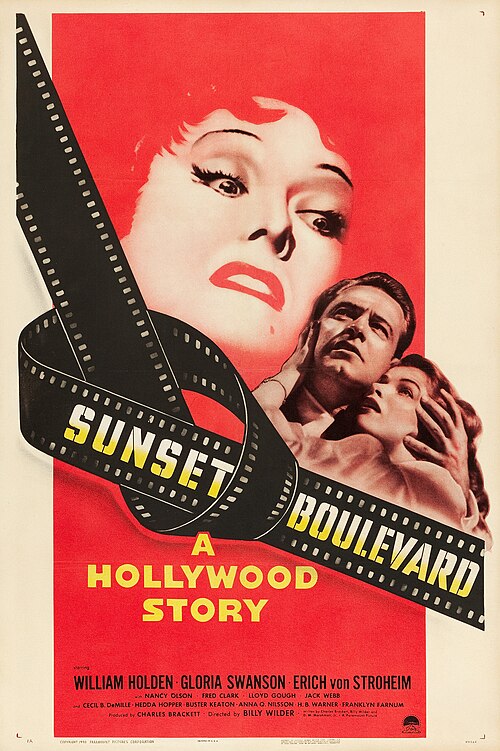
the film that re-ignited my love for film and for movies. saw for the first time at amc universal city with anastasia and absolutely adored it. wow. an amazing film. i can see why it’s her favorite.

